• Skip to primary navigation
  • Skip to main content
  • Skip to primary sidebar
  • Skip to footer

RealClimate

Climate science from climate scientists...

  • Start here
  • Model-Observation Comparisons
  • Miscellaneous Climate Graphics
  • Surface temperature graphics
You are here: Home / Archives for Extras / Glossary

Glossary

Labels for climate data

24 Apr 2014 by rasmus

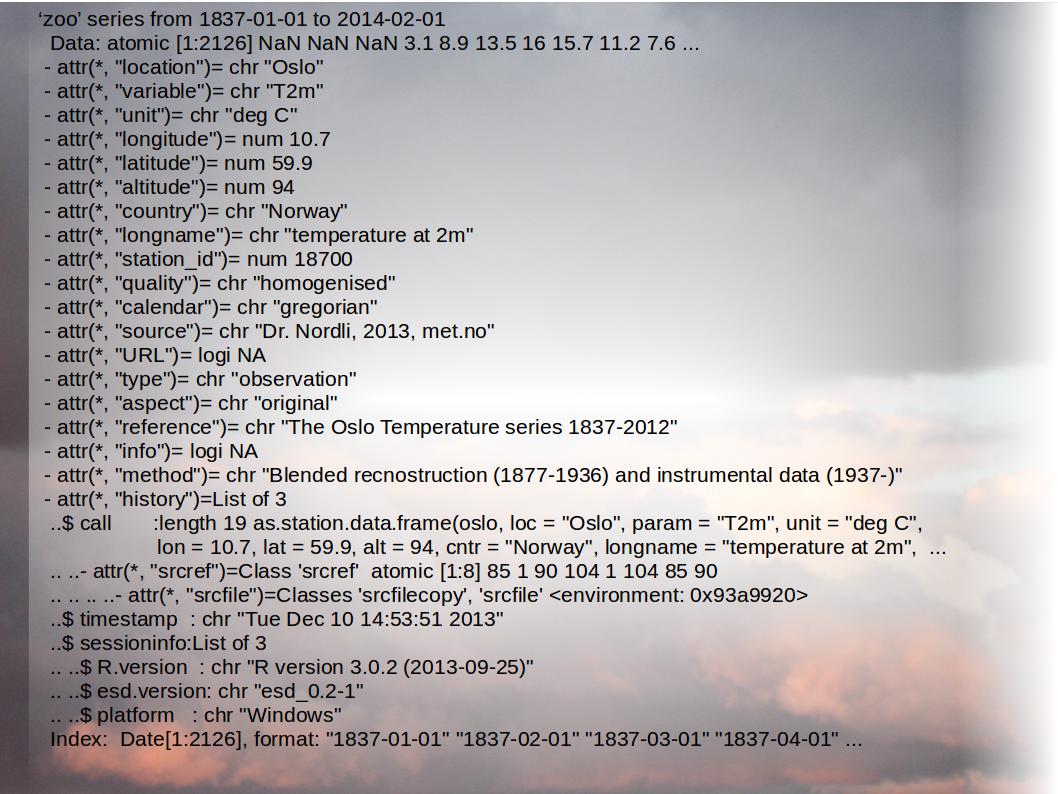
metadata-fig “These results are quite strange”, my colleague told me. He analysed some of the recent climate model results from an experiment known by the cryptic name ‘CMIP5‘. It turned out that the results were ok, but we had made an error when reading and processing the model output. The particular climate model that initially gave the strange results had used a different calendar set-up to the previous models we had examined.

[Read more…] about Labels for climate data

Filed Under: Climate modelling, Glossary, Scientific practice, Supplemental data

Comprehensive climate glossary

9 Aug 2008 by rasmus

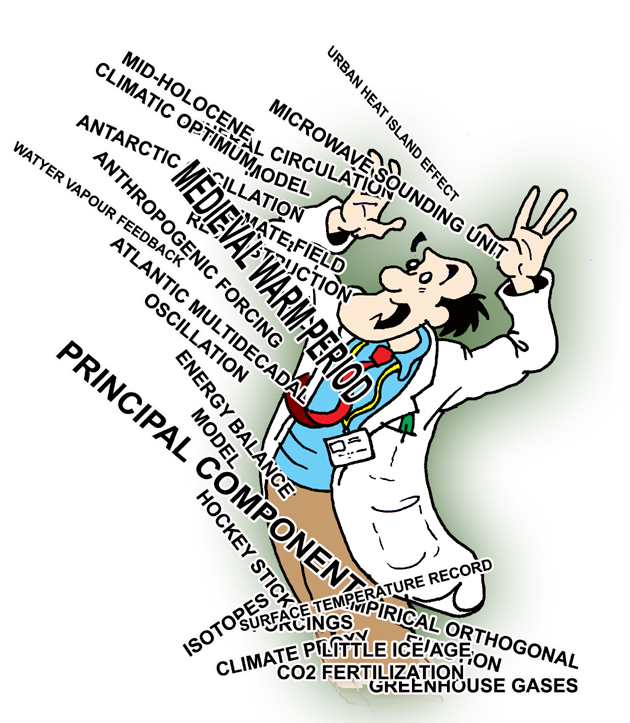
Glossary cartoon from Marc Roberts Recently we received a request for setting up a glossary-only search mechanism, or perhaps one web page with a long list of glossary entries with hot links to full explanations. The glossary that we already have is a good start, but we are all busy and it’s hard to find the time for extending this.

But there are also a number of external web pages which provide climate-related glossaries, such as the NOAA (they also have a seperate page for paleo-stuff), the Bureau of Meteorology (Australia, and there is even one by the Australian EPA), the Environmental Protection Agency (EPA, the U.S.), and the Western Regional Climate Center (WRCC, the U.S.). Wikipedia also has a glossary for climatological terms.

For those who seek the explanation for more bureaucratic terms, both the EU and the UNFCCC provide glossaries that may be useful.

Furthermore, there are some nice resources available, such as the Encyclopedia of Earth.

Filed Under: Climate Science, Glossary, Tutorials

Aerosol Aérosol

21 Dec 2004 by group

A collection of airborne solid or liquid particles, with a typical size between 0.01 and 10 µm and residing in the atmosphere for at least several hours. Aerosols may be of either natural or anthropogenic origin. Aerosols may influence climate in two ways: directly through scattering and absorbing radiation, and indirectly through acting as condensation nuclei for cloud formation or modifying the optical properties and lifetime of clouds (from the always useful IPCC glossary).

See-also: wiki:Aerosol.

Particules pouvant être solides ou liquides, en suspension dans l’air, qui ont une taille comprise 0.01 et 10 µm, et qui résident dans l’atmosphère au moins quelques heures. L’origine des aérosols peut être soit naturelle, soit anthropogénique. Les aérosols peuvent influencer le climat de deux manières : soit directement par la dispersion et l’absorption des rayonnements, soit indirectement en servant de noyaux de condensation pour la formation des nuages ou en modifiant les propriétés optiques et la durée de vie des nuages. (définition provenant du très utile glossaire du GIEC).

Filed Under: Glossary

Antarctic Oscillation (“AAO”) Oscillation Antarctique

28 Nov 2004 by group

Measure of the pressure gradient between the polar and subpolar regions of the Southern Hemisphere. Term was introduced by Thompson and Wallace (2000). More information on the AAO can be found here. See also Arctic Oscillation (“AO”).

Mesure du gradient de pression entre les régions pôlaires et sub-pôlaires de l’Hémisphère Sud. Ce terme a été employé pour la première fois par Thompson et Wallace (2000). Plus d’informations sur l’Oscillation Antarctique peuvent être trouvées ici. Voir également Oscillation Arctique.

Filed Under: Glossary

Anthropogenic Forcing Forçage Anthropogénique

28 Nov 2004 by group

Forcing due to human, rather than natural, factors. Such factors include increased greenhouse gas concentrations associated with fossil fuel burning, sulphate aerosols produced as an industrial by-product, human-induced changes in land surface properties among other things.

Forçage dû à l’action humaine, par opposition aux facteurs naturels. Les facteurs d’origine humaine incluent (entre autres) l’augmentation de la concentration en gaz à effet de serre associés à la combustion de carbone fossile, les aérosols sulfatés issus de l’industrie, et les changements des propriétés de la couverture terrestre liés à l’action humaine.

Filed Under: Glossary

Arctic Oscillation (“AO”) Oscillation Arctique

28 Nov 2004 by group

Measure of the pressure gradient between the polar and subpolar regions of the Northern Hemisphere. The term was introduced by Thompson and Wallace (2000). More information on the AO can be found here. See also North Atlantic Oscillation”(NAO”).

Mesure du gradient de pression entre les régions pôlaires et sub-pôlaires de l’Hémisphère Nord. Ce terme a été employé pour la première fois par Thompson et Wallace (2000). Plus d’informations peuvent être trouvées ici. Voir également : Oscillation Nord Atlantique.

Filed Under: Glossary

Atlantic Multidecadal Oscillation (“AMO”) Oscillation Atlantique Multi-Décennale (“AMO”)

28 Nov 2004 by group

A multidecadal (50-80 year timescale) pattern of North Atlantic ocean-atmosphere variability whose existence has been argued for based on statistical analyses of observational and proxy climate data, and coupled Atmosphere-Ocean General Circulation Model (“AOGCM”) simulations. This pattern is believed to describe some of the observed early 20th century (1920s-1930s) high-latitude Northern Hemisphere warming and some, but not all, of the high-latitude warming observed in the late 20th century. The term was introduced in a summary by Kerr (2000) of a study by Delworth and Mann (2000).
Mode de variabilité de l’océan et atmosphère de l’Atlantique Nord a l’échelle de temps multi-décennale (50 a 70 ans). Ce mode a été décrit sur la base d’analyses statistiques de données climatiques instrumentales et reconstruites par des proxies, ainsi que de simulations numériques de modèles couplés Océan-Atmosphère. Ce mode de variabilité contient une partie du réchauffement aux hautes latitudes de l’hémisphère Nord dans le début du 20ème siècle (années 1920-1930), et également en partie (mais pas tout) du réchauffement aux hautes latitudes observé a la fin du 20ème siècle. Ce terme a été employé pour la première fois par R.Kerr dans un résumé de l’étude de Delworth et Mann (2000).

Filed Under: Glossary

Atmosphere-Ocean General Circulation Model (“AOGCM”) Modèle Couplé Océan-Atmosphère de Circulation Générale (“AOGCM”)

28 Nov 2004 by group

Fully coupled atmosphere-ocean model of the three-dimensional global climate. See also ‘General Circulation Model (GCM)’.
Modèle couplé océan-atmosphère du climat global en trois dimensions. Voir également : ‘Modèle de Circulation Générale (GCM)’.

Filed Under: Glossary

Climate Field Reconstruction (“CFR”)

28 Nov 2004 by group

Approach to reconstructing a target large-scale climate field from predictors employing multivariate regression methods. CFR methods have been applied both to filling spatial gaps in early instrumental climate data sets, and to the problem of reconstructing past climate patterns from ‘climate proxy’ data.

Filed Under: Glossary

Climate Proxy ‘Proxy’ ou marqueur climatique

28 Nov 2004 by group

Climate ‘proxies’ are sources of climate information from natural archives such as tree rings, ice cores, corals, lake and ocean sediments, tree pollen, or human archives such as historical records or diaries, which can be used to estimate climate conditions prior to the modern period (e.g. mid 19th century to date) during which widespread instrumental measurements are available. Proxy indicators typically must be calibrated against modern instrumental information to yield a quantitative reconstruction of past climate.

Les marqueurs ou ‘proxis’ climatiques sont des sources d’information sur le climat provenant d’archives naturelles comme les cernes de croissance des arbres, les carottes glaciaires, les coraux, les sédiments lacustres et océaniques, les pollens ; ou d’archives humaines comme les enregistrements historiques et journaux, qui peuvent etre utilisés pour estimer les conditions climatiques avant la période moderne (environ le milieu du 19eme siecle), période pendant laquelle des mesures instrumentales sont largement disponibles. Les ‘proxis’ doivent etre calibrés sur les données instrumentales modernes pour fournir une reconstruction quantitative du climat.

Filed Under: Glossary

  • Page 1
  • Page 2
  • Page 3
  • Page 4
  • Go to Next Page »

Primary Sidebar

Search

Search for:

Email Notification

get new posts sent to you automatically (free)
Loading

Recent Posts

  • Unforced Variations: Dec 2025
  • Who should pay?
  • Site updates etc.
  • Raising Climate Literacy
  • Unforced variations: Nov 2025
  • High-resolution ‘fingerprint’ images reveal a weakening Atlantic Ocean circulation (AMOC)

Our Books

Book covers
This list of books since 2005 (in reverse chronological order) that we have been involved in, accompanied by the publisher’s official description, and some comments of independent reviewers of the work.
All Books >>

Recent Comments

  • Ray Ladbury on Who should pay?
  • Ron R. on Who should pay?
  • Barry E Finch on Unforced variations: Nov 2025
  • Ron R. on Who should pay?
  • Barton Paul Levenson on Who should pay?
  • E. Schaffer on Unforced Variations: Dec 2025
  • MA Rodger on Unforced Variations: Dec 2025
  • Atomsk’s Sanakan on Raising Climate Literacy
  • Kevin McKinney on Who should pay?
  • Kevin McKinney on Who should pay?
  • Atomsk’s Sanakan on Raising Climate Literacy
  • Ken Towe on Who should pay?
  • Mr. Know It All on Who should pay?
  • Adam Lea on Who should pay?
  • Nigelj on Who should pay?
  • patrick o twentyseven on Unforced variations: Nov 2025
  • patrick o twentyseven on Unforced variations: Nov 2025
  • Yebo Kando on Raising Climate Literacy
  • Nigelj on Who should pay?
  • patrick o twentyseven on Unforced variations: Nov 2025
  • Susan Anderson on Who should pay?
  • Ken Towe on Who should pay?
  • Mal Adapted on Who should pay?
  • Mal Adapted on Unforced Variations: Dec 2025
  • Rory Allen on Who should pay?
  • hayrake on Who should pay?
  • Thomas Fuller on Who should pay?
  • Susan Anderson on Who should pay?
  • Martin Smith on Who should pay?
  • Karsten V. Johansen on Who should pay?

Footer

ABOUT

  • About
  • Translations
  • Privacy Policy
  • Contact Page
  • Login

DATA AND GRAPHICS

  • Data Sources
  • Model-Observation Comparisons
  • Surface temperature graphics
  • Miscellaneous Climate Graphics

INDEX

  • Acronym index
  • Index
  • Archives
  • Contributors

Realclimate Stats

1,389 posts

15 pages

248,704 comments

Copyright © 2025 · RealClimate is a commentary site on climate science by working climate scientists for the interested public and journalists.