• Skip to primary navigation
  • Skip to main content
  • Skip to primary sidebar
  • Skip to footer

RealClimate

Climate science from climate scientists...

  • Start here
  • Model-Observation Comparisons
  • Miscellaneous Climate Graphics
  • Surface temperature graphics
You are here: Home / Archives for Climate Science

Climate Science

Ozone depletion and global warming Perte d’ozone et réchauffement climatique Ozon Azalması ve Küresel Isınma

14 Apr 2005 by Gavin

One of the most common mistakes that we have observed in discussions of climate and atmospheric change is confusion between the rather separate concepts of ozone depletion and global warming. This isn’t necessarily surprising given the scant information that most people pick up from the media. However, for many years meteorologists have been fighting a rearguard action to persuade people that the globe isn’t warming because there is more sun coming through the ozone hole. There are however important connections between the two issues that complicate potential actions that we might take to alleviate the different problems. This week, for instance, a new IPCC report was released that looked at the greenhouse warming potential of many of the replacement chemicals (HFCs and HCFCs) that were used to replace CFCs in aerosol cans and refrigeration units under the Montreal Protocol (and subsequent amendments).
par Gavin Schmidt, traduit par Vincent Noel

Dans le débat sur le changement climatique, l’une des erreurs les plus courantes est la confusion entre la diminution de l’ozone et le réchauffement planétaire. Ceci n’est pas vraiment surprenant, compte tenu de la qualité discutable des informations propagées par les medias.

Depuis plusieurs années maintenant, les climatologues et météorologues tentent d’expliquer au public que si la planète se rechauffe, ce n’est pas parce qu’il y a davantage de rayonnement solaire qui passe par le trou dans la couche d’ozone. Les deux phénomenes sont cependant étroitement liés, ce qui complique l’adoption d’une stratégie pour s’attaquer à l’un ou l’autre de ces problèmes. Cette semaine, par exemple, un nouveau rapport de l’IPCC s’est interessé au possible effet de serre des produits chimiques (HCF et HCFC) utilisés pour remplacer les CFC dans les bombes aérosols et les systèmes de refroidissement dans le cadre du protocole de Montréal (et de ses amendements).

(suite…)

[Read more…] about Ozone depletion and global warming Perte d’ozone et réchauffement climatique Ozon Azalması ve Küresel Isınma

Filed Under: Climate Science, Greenhouse gases

Water vapour: feedback or forcing?

6 Apr 2005 by Gavin

Whenever three or more contrarians are gathered together, one will inevitably claim that water vapour is being unjustly neglected by ‘IPCC’ scientists. “Why isn’t water vapour acknowledged as a greenhouse gas?”, “Why does anyone even care about the other greenhouse gases since water vapour is 98% of the effect?”, “Why isn’t water vapour included in climate models?”, “Why isn’t included on the forcings bar charts?” etc. Any mainstream scientist present will trot out the standard response that water vapour is indeed an important greenhouse gas, it is included in all climate models, but it is a feedback and not a forcing. From personal experience, I am aware that these distinctions are not clear to many, and so here is a more in-depth response (see also this other attempt).

Eine Übersetzung in deutsch finden Sie hier.
[Read more…] about Water vapour: feedback or forcing?

Filed Under: Climate modelling, Climate Science, FAQ, Greenhouse gases

Doubts about the Advent of Spring

1 Apr 2005 by Stefan

A “consensus view” amongst climate scientists holds that the Northern Hemisphere will be warming this month, as spring is coming. This is thought to be due to the Earth’s orbit around the sun and the inclination of the Earth’s axis, tilting the Northern Hemisphere progressively towards the sun throughout March and April and increasing the amount of solar radiation received at northern latitudes.

In a new novel, State of Euphoria, bestselling author Michael Crikey uncovers major flaws in this theory and warns against false hopes for the arrival of spring.
[Read more…] about Doubts about the Advent of Spring

Filed Under: Climate modelling, Climate Science, Instrumental Record, Sun-earth connections

Worldwide glacier retreat Recul mondial des glaciers

18 Mar 2005 by eric

One of the most visually compelling examples of recent climate change is the retreat of glaciers in mountain regions. In the U.S. this is perhaps most famously observed in Glacier National Park, where the terminus of glaciers have retreated by several kilometers in the past century, and could be gone before the next century (see e.g. the USGS web site, here, and here). In Europe, where there is abundant historical information (in the form of paintings, photographs, as well as more formal record-keeping), retreat has been virtually monotonic since the mid 19th century (see e.g. images of the glaciers at Chamonix). These changes are extremely well documented, and no serious person questions that they demonstrate long term warming of climate in these regions. New work published in Science (“Extracting a Climate Signal from 169 Glacier Records”) highlights these results, and uses them to make a new estimate of global temperature history since about 1600 A.D., which agrees rather well with previous, independent temperature reconstructions.

Par Eric Steig (traduit par Claire Rollion-Bard)

Un des exemples les plus irrésistibles visuellement du récent changement climatique est le recul des glaciers dans les régions montagneuses. Aux Etats-Unis, c’est peut-être ce qui est le plus fameusement observé au Glacier National Park où les terminus des glaciers se sont retirés de quelques kilomètres au cours du dernier siècle (voir e.g. le site web de USGS, ici, and ici)ici et ici). En Europe, où il y a des informations historiques importantes (sous la forme de peintures, photographies, aussi bien que sous forme d’enregistrements plus formels), le recul a été virtuellement monotone depuis le milieu du 19ème siècle (voir e.g. images de glaciers à Chamonix). Ces changements sont extrêmement bien documentés si bien qu’aucune personne sérieuse ne doute que cela démontre le réchauffement à long terme du climat dans ces régions. Un travail récent publié dans Science (“Extracting a Climate Signal from 169 Glacier Records”) souligne ces résultats et les utilise pour faire une nouvelle estimation de l’histoire globale des températures depuis environ 1600 A.D., et qui est en assez bon accord avec les précédentes reconstructions indépendantes de la température.
(suite…)

[Read more…] about Worldwide glacier retreat Recul mondial des glaciers

Filed Under: Climate Science, Instrumental Record, Paleoclimate

How long will global warming last? Pendant combien de temps le réchauffement global persistera-t-il ?

15 Mar 2005 by david

Guest commentary from David Archer (U. Chicago)

The notion is pervasive in the popular and scientific literature that the lifetime of anthropogenic CO2 released to the atmosphere is some fuzzy number measured most conveniently in decades or centuries. The reality is that the CO2 from a gallon out of every tank of gas will continue to affect climate for tens and even hundreds of thousands of years into the future.


Commentaire invité par David Archer (Univ. Chicago) (traduit par Thibault de Garidel)

La notion que la durée de vie du CO2 émis dans l’atmosphère par l’action humaine se situe entre quelques décennies � quelques siècles, est omniprésente dans les revues de vulgarisation scientifique ainsi que celles spécialisées. La réalité est que chaque litre de pétrole que nous utilisons en faisant le plein de notre voiture continuera � affecter le climat pendant les prochaines dizaines et mêmes centaines de milliers d’années.

(suite…)

[Read more…] about How long will global warming last? Pendant combien de temps le réchauffement global persistera-t-il ?

Filed Under: Climate Science, Greenhouse gases, Paleoclimate

IPCC in action: Part II

15 Mar 2005 by rasmus

The primary purpose of the Intergovernmental Panel for Climate Change (IPCC) is to assess the available scientific knowledge about climate change, not to initiate new research. The next IPCC report (Assessment Report 4, or AR4) is due in 2007, and in order to update of the state of knowledge it will only consider papers published in peer-review scientific journals between 2000 and papers submitted by May 1st 2005 (must be accepted before December 2005). It is essential that the papers be published in scientific quality journals in order to ensure the credibility of the results. Nevertheless the IPCC reports undergo several additional reviews and revisions involving a large number of independent referees. Thus, the IPCC reports undergo a more stringent review process than common papers in the scientific literature.

[Read more…] about IPCC in action: Part II

Filed Under: Climate modelling, Climate Science, IPCC

IPCC in action: Part I

14 Mar 2005 by Gavin

This is the first of two pieces on the recent IPCC workshop in Hawaii, This brought together independent researchers from all over the world to analyse computer model simulations of the last 150 years and to assess whether they are actually any good.

Guest commentary from Natassa Romanou (Columbia University)

During the first 3 days of March 2005, balmy downtown Honolulu in Hawaii was buzzing with agile scientists conversing, chatting, announcing, briefing and informing about IPCC assessment reports, climate models, model evaluations, climate sensitivities and feedbacks. These were the participants of the Climate Model Evaluation Project workshop (CMEP) and came here from most (if not all) the major, most prestigious climate research laboratories of the world, including; The US labs National Center for Atmospheric Research, the Geophysical Fluid Dynamics Laboratory and the Goddard Institute for Space Studies, the British Hadley Centre for Climate Prediction, the German Max Planck Institute for Meteorology, the Canadian Centre for Climate Modelling and Analysis, the French Centre National de Recherches Meteorologiques and the IPSL/LMD/LSCE, the Australian CSIRO Atmospheric Research, the Chinese Institute of Atmospheric Physics, the Russian Institute for Numerical Mathematics and the Japanese Meteorological Research Institute. This meeting was sponsored by the benevolent NSF, NOAA, NASA and DOE.

[Read more…] about IPCC in action: Part I

Filed Under: Climate modelling, Climate Science, IPCC

Will spring 2005 be a bad one for Arctic ozone? Le printemps 2005 comptera-t-il parmi les mauvais pour l’ozone arctique ?

10 Mar 2005 by Gavin

Guest Commentary by Drew Shindell (NASA GISS)

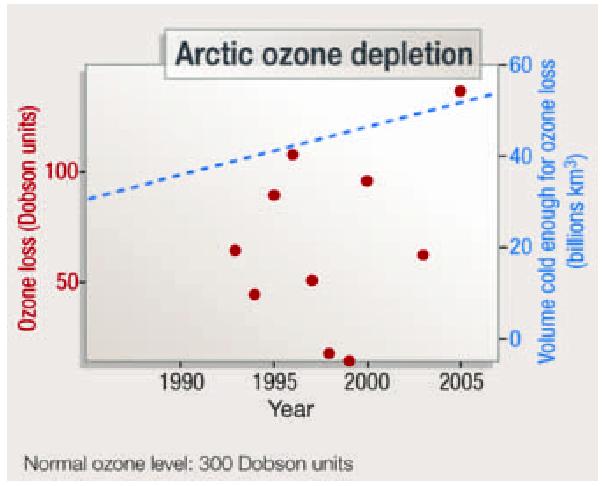
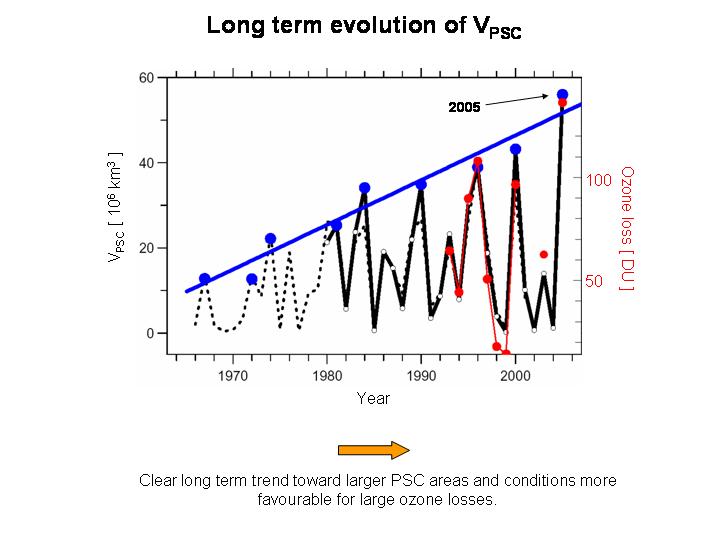
The current winter and early spring have been extremely cold in the Arctic stratosphere, leading to the potential for substantial ozone depletion there. This has been alluded to recently in the press (Sitnews, Seattle Post Intelligencer), but what’s the likely outcome, and why is it happening?

Par Drew Shindell, NASA, GISS (traduit par Pierre Allemand)

L’hiver actuel et le début du printemps ont été extrêmement froids dans la stratosphère arctique, ce qui est un facteur de réduction substantielle de l’ozone dans cette région. La presse a récemment fait allusion à ce phénomène, (Sitnews, Seattle Post Intelligencer),mais quels sont, en fait, les résultats, et qu’est-ce qui fait que cela arrive ?

(suite…)

[Read more…] about Will spring 2005 be a bad one for Arctic ozone? Le printemps 2005 comptera-t-il parmi les mauvais pour l’ozone arctique ?

Filed Under: Arctic and Antarctic, Climate Science

The Last Word for Now…

25 Feb 2005 by group

Of possible interest to our readers, there was an interview yesterday on the BBC (“Today Programme”) regarding the supposed controversy about the “Hockey Stick”: A climate scientist Professor Michael Mann suggests global warming is caused by mankind (mp3 file). Also available on the BBC website is the real audio file of the interview.

Filed Under: Climate Science

How rapid-response works

24 Feb 2005 by group

Nature this week published a letter from Dr. Huang (U. Mich) highlighting how this ‘brave new world’ of science blogging works. He writes:

I was concerned to find that … [a figure] included an outdated and erroneous reconstruction of borehole data. … In my view, the website should have used a later version … To be fair, the authors of the website added a correction after I drew their attention to this.

In an early post, we used a figure that contained a minor error regarding how a borehole temperature reconstruction had been scaled. This mistake had been properly corrected in the literature, and so this was indeed an oversight on our part. Dr Huang was kind enough to remind us of this and we amended the caption immediately to point this out and direct readers to the correction should they be interested. Since this mistake was not central to the point being made in the post, we left the original figure in place.

The Internet is nothing if not flexible, and unlike in journals where mistakes can persist an awfully long time, we are able to correct such problems very quickly. In this respect, Dr. Huang’s letter seems to indicate that things are actually working quite well here.

We would like to take this opportunity to re-iterate our commitment to getting the science right, and as importantly, getting it right in real-time. We welcome all corrections or clarifications and we will endeavour to fix any errors, great or small, as quickly as we can.

RealClimate

Filed Under: Climate Science, In the News

  • « Go to Previous Page
  • Page 1
  • Interim pages omitted …
  • Page 122
  • Page 123
  • Page 124
  • Page 125
  • Page 126
  • Interim pages omitted …
  • Page 129
  • Go to Next Page »

Primary Sidebar

Search

Search for:

Email Notification

get new posts sent to you automatically (free)
Loading

Recent Posts

  • Unforced Variations: Dec 2025
  • Who should pay?
  • Site updates etc.
  • Raising Climate Literacy
  • Unforced variations: Nov 2025
  • High-resolution ‘fingerprint’ images reveal a weakening Atlantic Ocean circulation (AMOC)

Our Books

Book covers
This list of books since 2005 (in reverse chronological order) that we have been involved in, accompanied by the publisher’s official description, and some comments of independent reviewers of the work.
All Books >>

Recent Comments

  • Susan Anderson on Unforced Variations: Dec 2025
  • One Anonymous Bloke on Unforced Variations: Dec 2025
  • Susan Anderson on Unforced Variations: Dec 2025
  • Piotr on Unforced Variations: Dec 2025
  • zebra on Who should pay?
  • Ray Ladbury on Who should pay?
  • Tomáš Kalisz on Unforced Variations: Dec 2025
  • Ray Ladbury on Who should pay?
  • Nigelj on Who should pay?
  • Nigelj on Raising Climate Literacy
  • Barry E Finch on Unforced Variations: Dec 2025
  • Ken Towe on Who should pay?
  • Atomsk’s Sanakan on Unforced variations: Nov 2025
  • patrick o twentyseven on Who should pay?
  • Atomsk’s Sanakan on Raising Climate Literacy
  • Atomsk’s Sanakan on Raising Climate Literacy
  • Susan Anderson on Who should pay?
  • Susan Anderson on Raising Climate Literacy
  • Radge Havers on Who should pay?
  • One Anonymous Bloke on Unforced Variations: Dec 2025
  • Ron R.. on Who should pay?
  • JCM on Raising Climate Literacy
  • Barry E Finch on Unforced Variations: Dec 2025
  • Barry E Finch on Unforced Variations: Dec 2025
  • Barton Paul Levenson on Raising Climate Literacy
  • Barton Paul Levenson on Who should pay?
  • MA Rodger on Unforced Variations: Dec 2025
  • zebra on Unforced Variations: Dec 2025
  • zebra on Unforced Variations: Dec 2025
  • ozajh on Who should pay?

Footer

ABOUT

  • About
  • Translations
  • Privacy Policy
  • Contact Page
  • Login

DATA AND GRAPHICS

  • Data Sources
  • Model-Observation Comparisons
  • Surface temperature graphics
  • Miscellaneous Climate Graphics

INDEX

  • Acronym index
  • Index
  • Archives
  • Contributors

Realclimate Stats

1,389 posts

15 pages

248,798 comments

Copyright © 2025 · RealClimate is a commentary site on climate science by working climate scientists for the interested public and journalists.