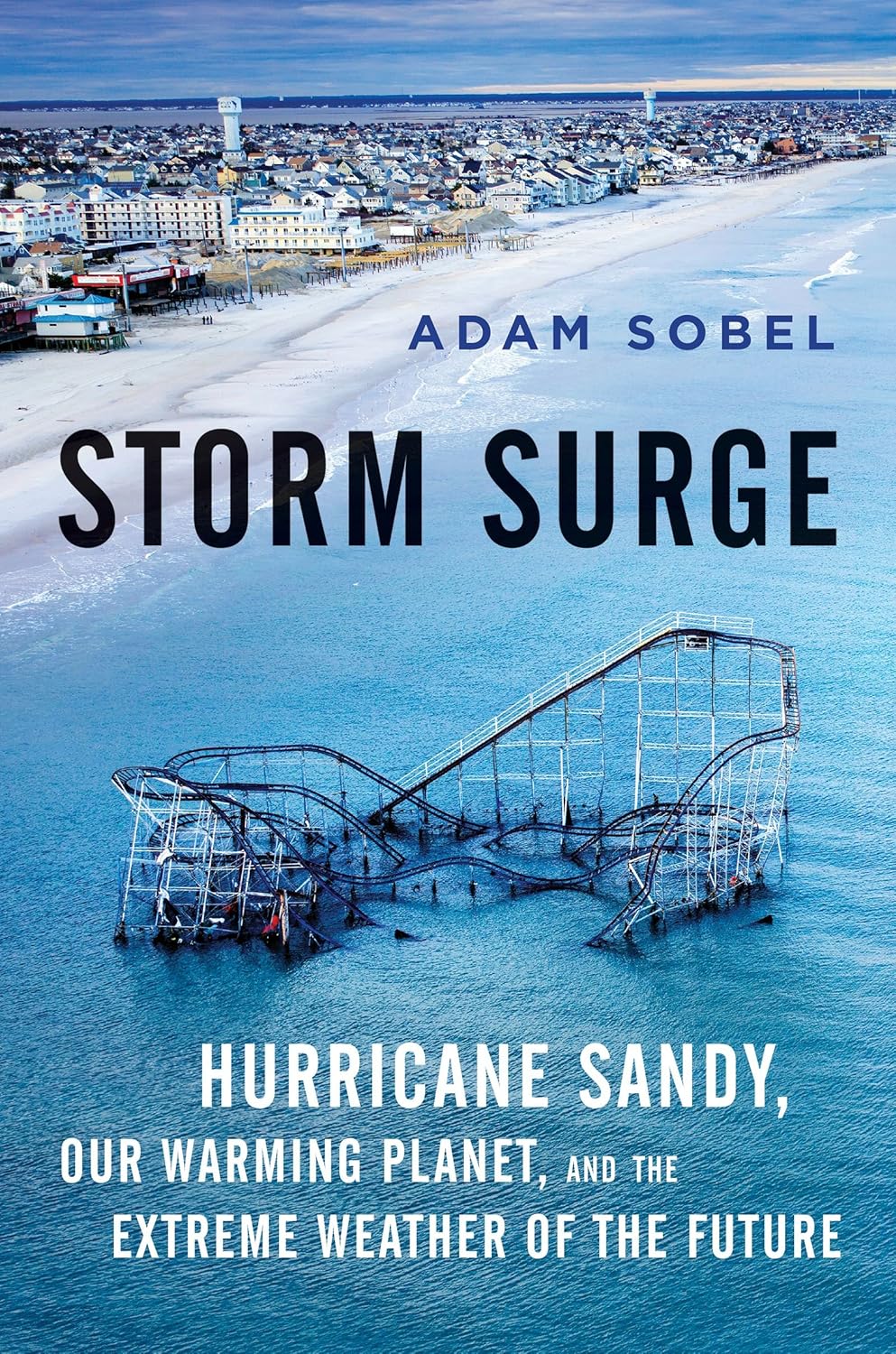
 On the second anniversary of Superstorm Sandy making landfall, we are running an extract from a new book by Adam Sobel “Storm Surge: Hurricane Sandy, Our Changing Climate, and Extreme Weather of the Past and Future”. It’s a great read covering the meteorology of the event, the preparation, the response and the implications for the future.
Extras
Labels for climate data
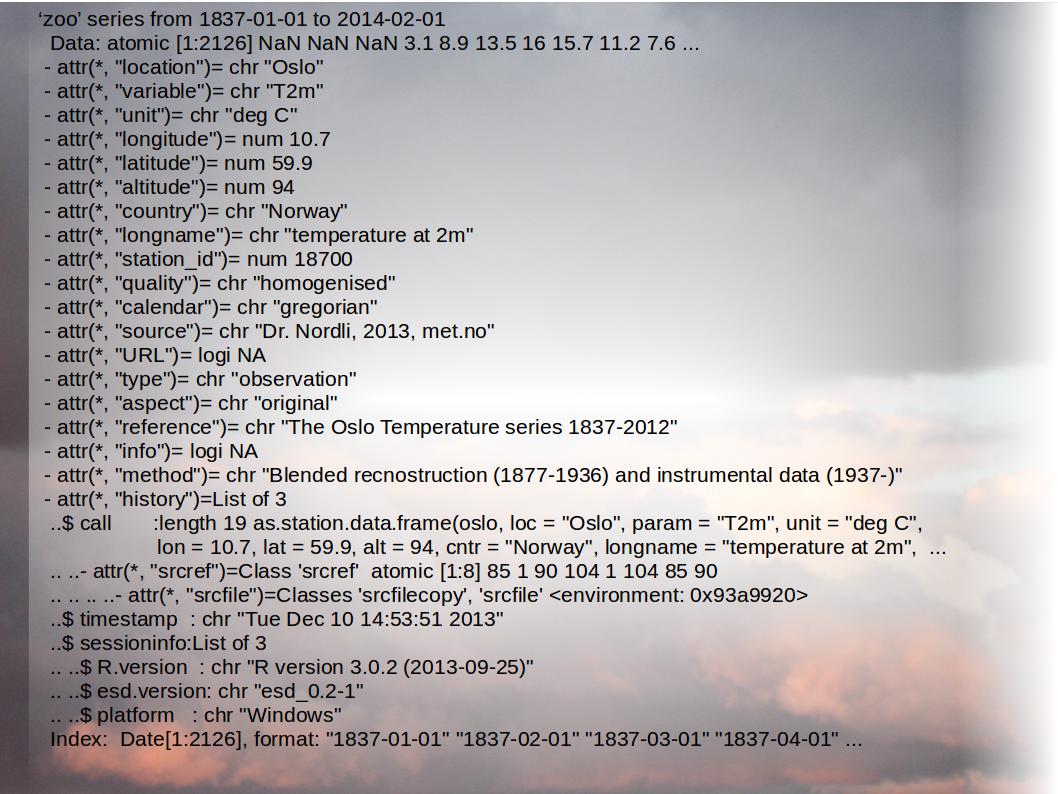 “These results are quite strange”, my colleague told me. He analysed some of the recent climate model results from an experiment known by the cryptic name ‘CMIP5‘. It turned out that the results were ok, but we had made an error when reading and processing the model output. The particular climate model that initially gave the strange results had used a different calendar set-up to the previous models we had examined.
A new European report on climate extremes is out
A new report on extreme climate events in Europe is just published: ‘Extreme Weather Events in Europe: preparing for climate change adaptation‘. It was launched in Oslo on October 24th by the Norwegian Academy of Science and Letters, and the report is now available online.
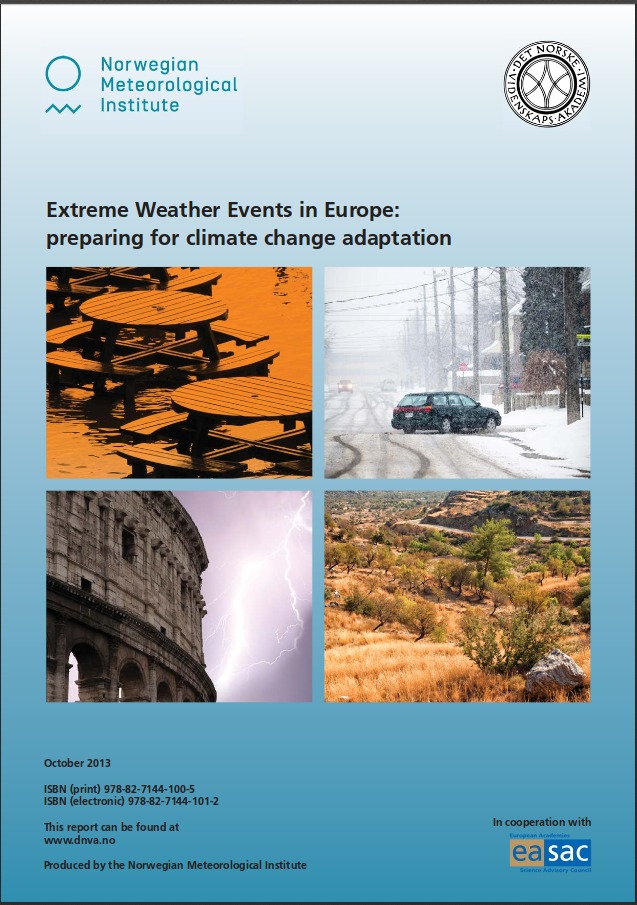
preparing for climate change adaptation’
What’s new? The new report provides information that is more specific to Europe than the SREX report from the Intergovernmental Panel on Climate Change (IPCC), and incorporate phenomena that have not been widely covered.
It provides some compelling information drawn from the insurance industry, and indeed, a representative from Munich Re participated in writing this report. There is also material on convective storms, hail, lightening, and cold snaps, and the report provides a background on extreme value statistics, risk analysis, impacts, and adaptation.
[Read more…] about A new European report on climate extremes is out
A new experiment with science publication
A while ago, I received a request to publish a paper on a post that I had written here on RealClimate, exposing the flaws in the analysis of Humlum et al., (2011).
Instead of writing a comment to one paper, however, I thought it might be useful to collect a sample of papers that I found unconvincing (usual suspects), and that have had a fairly high public profile.
[Read more…] about A new experiment with science publication
References
- O. Humlum, J. Solheim, and K. Stordahl, "Identifying natural contributions to late Holocene climate change", Global and Planetary Change, vol. 79, pp. 145-156, 2011. http://dx.doi.org/10.1016/j.gloplacha.2011.09.005
The answer is blowing in the wind: The warming went into the deep end
There has been an unusual surge of interest in the climate sensitivity based on the last decade’s worth of temperature measurements, and a lengthy story in the Economist tries to argue that the climate sensitivity may be lower than previously estimated. I think its conclusion is somewhat misguided because it missed some important pieces of information (also see skepticalscience’s take on this story here).
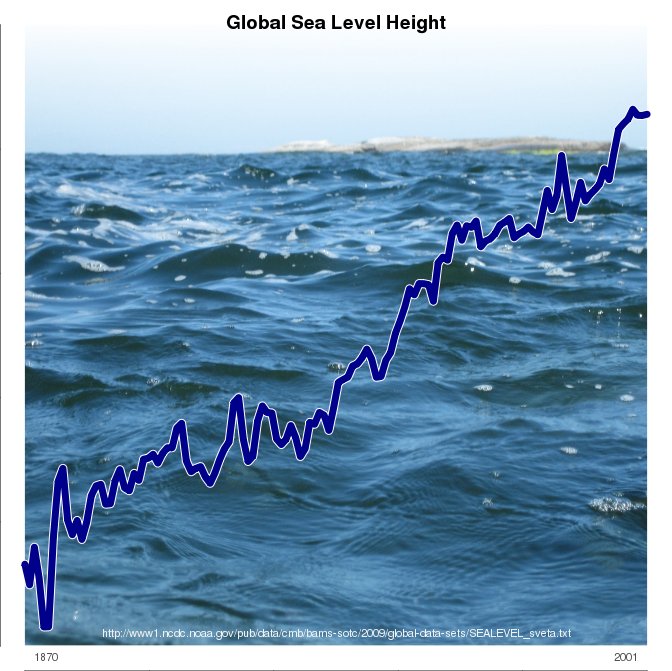
While the Economist referred to some unpublished work, it missed a new paper by Balmaseda et al. (2013) which provides a more in-depth insight. Balmaseda et al suggest that the recent years may not have much effect on the climate sensitivity after all, and according to their analysis, it is the winds blowing over the oceans that may be responsible for the ‘slow-down’ presented in the Economist.
[Read more…] about The answer is blowing in the wind: The warming went into the deep end
References
- M.A. Balmaseda, K.E. Trenberth, and E. Källén, "Distinctive climate signals in reanalysis of global ocean heat content", Geophysical Research Letters, vol. 40, pp. 1754-1759, 2013. http://dx.doi.org/10.1002/grl.50382
Ice hockey
Eric Steig
It is well known that ice shelves on the Antarctic Peninsula have collapsed on several occasions in the last couple of decades, that ice shelves in West Antarctica are thinning rapidly, and that the large outlet glaciers that drain the West Antarctic ice sheet (WAIS) are accelerating. The rapid drainage of the WAIS into the ocean is a major contributor to sea level rise (around 10% of the total, at the moment).
All of these observations match the response, predicted in the late 1970s by glaciologist John Mercer, of the Antarctic to anthropogenic global warming. As such, they are frequently taken as harbingers of greater future sea level rise to come. Are they?
Two papers published this week in Nature Geoscience provide new information that helps to address this question. One of the studies (led by me) says “probably”, while another (Abram et al.) gives a more definitive “yes”. [Read more…] about Ice hockey
Language Intelligence – Lessons on persuasion from Jesus, Shakespeare, Lincoln, and Lady Gaga: A Review
Any book that manages to link together the lessons of the Bible, Shakespeare, Abraham Lincoln, and Lady Gaga (not to mention Martin Luther King, Winston Churchill, Bob Dylan, and Jerry Seinfeld), can’t be all bad. With Joe Romm’s new book Language Intelligence, it is, in fact, ALL good. There are lessons galore for the scientists among us who value public outreach and communication. The book is a de facto field guide for recognizing and assimilating many of the key tools of persuasive language and speech, something that is ever more important to science communicators who face the daunting challenge of having to communicate technical and nuanced material to an audience largely unfamiliar with the lexicon of science, sometimes agnostic or even unreceptive to its message, and—in the case of contentious areas like climate change and evolution—already subject to a concerted campaign to misinform and confuse them.
[Read more…] about Language Intelligence – Lessons on persuasion from Jesus, Shakespeare, Lincoln, and Lady Gaga: A Review
The IPCC SREX: the report is finally out.
Some of us have been waiting quite a while now, especially since the ‘road tour’ meant to present the Special Report on Managing the Risks of Extreme Events and Disasters to Advance Climate Change Adaptation starting in Oslo on January 24th this year. The summary for policymakers (SPM) was released already in 18 November 2011 (Kampala) and now the report is finally available (link).

[Read more…] about The IPCC SREX: the report is finally out.
The dog is the weather
Update January 27: There is also another recent dog-based animations from Victoria (southeast Australia) explaining some of the key drivers of our climate and how some are changing.
A TV series that ran on Norwegian TV (NRK) last year included a simple and fun cartoon that demonstrates some important concepts relative to weather and climate:

In the animation, the man’s path can be considered as analogous to a directional climatic change, while the path traced by his dog’s whimsical movements represent weather fluctuations, as constrained by the man’s path, the leash, and the dog’s moment-by-moment decisions of what seems important to investigate in his small world. What might the leash length represent? The man’s momentary pause? The dog’s exact route relative to concepts of random variation? The messages in this animation are similar to the recent results of Grant Foster and Stefan Rahmstorf in ERL (see post here).
We’d also like to praise the TV-series ‘Siffer‘, hosted by an enthusiastic statistician explaining how most things in our world relate to mathematics. The series covers a range of subjects, for instance gambling theory, the Tragedy of the Commons, anecdotes about mathematical riddles, medical statistics, and construction design; it even answers why champagne from a large bottle tastes better than that from a smaller one. There is also an episode devoted to weather forecasting and climate.
Success in understanding our universe often depends on how the ‘story’ about it is told, and a big part of that often involves how mental images are presented. Mathematics and statistics can describe nature in great detail and “elegance”, but they are often difficult and inaccessible to the average person. Conversely, the man-and-dog animation is intuitive and easy to comprehend. Similarly, Hans Rosling’s Fun with Stats provides some very nice demonstrations of how to convey meaning via the creative display of numbers.
Curve-fitting and natural cycles: The best part
It is not every day that I come across a scientific publication that so totally goes against my perception of what science is all about. Humlum et al., 2011 present a study in the journal Global and Planetary Change, claiming that most of the temperature changes that we have seen so far are due to natural cycles.
They claim to present a new technique to identify the character of natural climate variations, and from this, to produce a testable forecast of future climate. They project that
the observed late 20th century warming in Svalbard is not going to continue for the next 20–25 years. Instead the period of warming may be followed by variable, but generally not higher temperatures for at least the next 20–25 years.
However, their claims of novelty are overblown, and their projection is demonstrably unsound.
[Read more…] about Curve-fitting and natural cycles: The best part
References
- O. Humlum, J. Solheim, and K. Stordahl, "Identifying natural contributions to late Holocene climate change", Global and Planetary Change, vol. 79, pp. 145-156, 2011. http://dx.doi.org/10.1016/j.gloplacha.2011.09.005