• Skip to primary navigation
  • Skip to main content
  • Skip to primary sidebar
  • Skip to footer

RealClimate

Climate science from climate scientists...

  • Start here
  • Model-Observation Comparisons
  • Miscellaneous Climate Graphics
  • Surface temperature graphics
You are here: Home / Archives for Climate Science / Greenhouse gases

Greenhouse gases

Climate Change and Tropical Cyclones (Yet Again)

18 May 2008 by rasmus

By Rasmus Benestad & Michael Mann
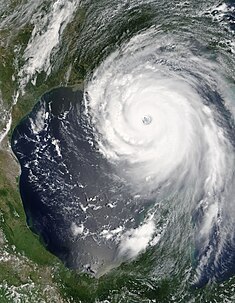
Hurricane Katerina
Just as Typhoon Nargis has reminded us of the destructive power of tropical cyclones (with its horrible death toll in Burma–around 100,000 according to the UN), a new paper by Knutson et al in the latest issue of the journal Nature Geosciences purports to project a reduction in Atlantic hurricane activity (principally the ‘frequency’ but also integrated measures of powerfulness).

The close timing of the Knutson et al and Typhoon Nargis is of course coincidental. But the study has been accorded the unprecedented privilege (that is, for a climate change article published during the past 7 years) of a NOAA press conference. What’s the difference this time? Well, for one thing, the title of the paper: “Simulated reduction in Atlantic hurricane frequency under twenty-first-century warming conditions” (emphasis added).

[Read more…] about Climate Change and Tropical Cyclones (Yet Again)

Filed Under: Climate modelling, Climate Science, El Nino, Greenhouse gases, Hurricanes

Target CO2 Objectivo CO2

7 Apr 2008 by Gavin

What is the long term sensitivity to increasing CO2? What, indeed, does long term sensitivity even mean? Jim Hansen and some colleagues (not including me) have a preprint available that claims that it is around 6ºC based on paleo-climate evidence. Since that is significantly larger than the ‘standard’ climate sensitivity we’ve often talked about, it’s worth looking at in more detail.


Traducido por Angela Carosio

[Read more…] about Target CO2 Objectivo CO2

Filed Under: Climate Science, Greenhouse gases, Paleoclimate

Air Capture Captura de Aire

30 Mar 2008 by group

Guest Commentary by Frank Zeman

[This is one of an occasional series on the science of mitigation/adaptation/geo-engineering that we hope to continue. Since this isn’t our core expertise, we’d especially appreciate balanced contributions from other scientists.]

One of the central challenges of controlling anthropogenic climate change is developing technologies that deal with emissions from small, dispersed sources such as automobiles and residential houses. Capturing these emissions is more difficult as they are too small to support infrastructure, such as pipelines, and may be mobile, as with cars. For these reasons, proposed solutions, such as switching to using hydrogen or electricity as a fuel, rely on the carbon-free generation of electricity or hydrogen. That implies that the fuel must be made either by renewable generation (wind, solar, geothermal etc.), nuclear or by facilities that capture the carbon dioxide and store it (CCS).

There is however an alternative that gets some occasional attention: Air Capture (for instance, here or here). The idea would be to let people emit the carbon dioxide at the source but then capture it directly from the atmosphere at a separate facility.

Par Frank Zeman, traducido por Angela Carosio
[Read more…] about Air Capture Captura de Aire

Filed Under: Climate Science, Greenhouse gases

Tropical tropospheric trends

12 Dec 2007 by group

Once more unto the breach, dear friends, once more!

Some old-timers will remember a series of ‘bombshell’ papers back in 2004 which were going to “knock the stuffing out” of the consensus position on climate change science (see here for example). Needless to say, nothing of the sort happened. The issue in two of those papers was whether satellite and radiosonde data were globally consistent with model simulations over the same time. Those papers claimed that they weren’t, but they did so based on a great deal of over-confidence in observational data accuracy (see here or here for how that turned out) and an insufficient appreciation of the statistics of trends over short time periods.

Well, the same authors (Douglass, Pearson and Singer, now joined by Christy) are back with a new (but necessarily more constrained) claim, but with the same over-confidence in observational accuracy and a similar lack of appreciation of short term statistics.
[Read more…] about Tropical tropospheric trends

Filed Under: Climate modelling, Climate Science, Greenhouse gases, Instrumental Record

Is the ocean carbon sink sinking? ¿Está desapareciendo el sumidero de carbono oceánico?

1 Nov 2007 by david

The past few weeks and years have seen a bushel of papers finding that the natural world, in particular perhaps the ocean, is getting fed up with absorbing our CO2. There are uncertainties and caveats associated with each study, but taken as a whole, they provide convincing evidence that the hypothesized carbon cycle positive feedback has begun. [Read more…] about Is the ocean carbon sink sinking? ¿Está desapareciendo el sumidero de carbono oceánico?

Filed Under: Climate Science, Greenhouse gases, Oceans

CO2 equivalents

11 Oct 2007 by Gavin

There was a minor kerfuffle in recent days over claims by Tim Flannery (author of “The Weather Makers”) that new information from the upcoming IPCC synthesis report will show that we have reached 455 ppmv CO2_equivalent 10 years ahead of schedule, with predictable implications. This is confused and incorrect, but the definitions of CO2_e, why one would use it and what the relevant level is, are all highly uncertain in many peoples’ minds. So here is a quick rundown.

Definition: The CO2_equivalent level is the amount of CO2 that would be required to give the same global mean radiative forcing as the sum of a basket of other forcings. This is a way to include the effects of CH4 and N2O etc. in a simple way, particularly for people doing future impacts or cost-benefit analysis. The equivalent amount is calculated using the IPCC formula for CO2 forcing:

Total Forcing = 5.35 log(CO2_e/CO2_orig)

where CO2_orig is the 1750 concentration (278 ppmv).

Usage: There are two main ways it is used. Firstly, it is often used to group together all the forcings from the Kyoto greenhouse gases (CO2, CH4, N2O and CFCs), and secondly to group together all forcings (including ozone, sulphate aerosols, black carbon etc.). The first is simply a convenience, but the second is what matters to the planet. Many stabilisation scenarios, such as are being discussed in UNFCCC negotiations are based on stabilising total CO2_e at 450, 550 or 750 ppmv.

Magnitude The values of CO2_e (Kyoto) and CO2_e (Total) can be calculated from Figure 2.21 and Table 2.12 in the IPCC WG1 Chapter 2. The forcing for CO2, CH4 (including indirect effects), N2O and CFCs is 1.66+0.48+0.07+0.16+0.34=2.71 W/m2 (with around 0.3 W/m2 uncertainty). Using the formula above, that gives CO2_e (Kyoto) = 460 ppmv. However, including all the forcings (some of which are negative), you get a net forcing of around 1.6 W/m2, and a CO2_e (Total) of 375 ppmv with quite a wide error bar. This is, coincidently, close to the actual CO2 level.

Implications The important number is CO2_e (Total) which is around 375 ppmv. Stabilisation scenarios of 450 ppmv or 550 ppmv are therefore still within reach. Claims that we have passed the first target are simply incorrect, however, that is not to say they are easily achievable. It is even more of a stretch to state that we have all of a sudden gone past the ‘dangerous’ level. It is still not clear what that level is, but if you take a conventional 450 ppmv CO2_e value (which will lead to a net equilibrium warming of ~ 2 deg C above pre-industrial levels), we are still a number of years from that, and we have (probably) not yet committed ourselves to reaching it.

Finally, the IPCC synthesis report is simply a concise summary of the three separate reports that have already come out. It therefore can’t be significantly different from what is already available. But this is another example where people are quoting from draft reports that they have neither properly read nor understood and for which better informed opinion is not immediately available. I wish journalists and editors would resist the temptation to jump on leaks like this (though I know it’s hard). The situation is confusing enough without adding to it unintentionally.

Filed Under: Climate Science, Greenhouse gases, IPCC

The CO2 problem in 6 easy steps

6 Aug 2007 by Gavin

We often get requests to provide an easy-to-understand explanation for why increasing CO2 is a significant problem without relying on climate models and we are generally happy to oblige. The explanation has a number of separate steps which tend to sometimes get confused and so we will try to break it down carefully.
[Read more…] about The CO2 problem in 6 easy steps

Filed Under: Climate Science, Greenhouse gases

Ozone impacts on climate change

27 Jul 2007 by Gavin

In a nice example of how complicated climate feedbacks and interactions can be, Sitch and colleagues report in Nature advance publication on a newly modelled effect of ground level (or tropospheric) ozone on carbon uptake on land (BBC). The ozone they are talking about is the ‘bad’ ozone (compared to ‘good’ stratospheric ozone) and is both a public health hazard and a greenhouse gas. Tropospheric ozone isn’t directly emitted by human activity, but is formed in the atmosphere as a result of photolytic reactions related to CH4, CO, NOx and VOCs (Volatile Organic Compounds like isoprene, benzene etc.) – the so-called ozone precursors.

It’s well known that increased ozone levels – particularly downwind of cities – can be harmful to plants, and in this new study with a carbon-climate model, they quantify how by how much increasing ozone levels make it more difficult for carbon to be sequestered by the land biosphere. This leads to larger CO2 levels in the atmosphere than before. Hence the ozone has, as well as its direct effect as a greenhouse gas, an indirect effect on CO2, which in this model at least appears to be almost as large.

Actually it’s even more complicated. Methane emissions are one of the principal causes of the rise of ozone, and the greenhouse effect of ozone can be thought of as an indirect effect of CH4 (and CO and VOCs). But while NOx is an ozone precursor, it actually has an indirect effect that reduces CH4, so that the net impact of NOx has been thought to be negative (i.e. the reduction in CH4 outweighs the increase of ozone in radiative forcing – see this paper for more details). This new result might prompt a re-adjustment of that balance – i.e. if the ozone produced by NOx has a stronger effect than previously thought (through this new indirect mechanism), than it might outweigh the reduction in CH4, and lead to NOx emissions themselves being a (slightly) positive forcing.

In a bizarre way this is actually good news. There are plenty of reasons to reduce NOx emissions already because of it’s impact on air pollution and smog, but this new result might mean that reductions wouldn’t make climate change any worse. It also, once again, highlights the role of CH4 (the second biggest GHG forcing), and points out a further reason (if that was required) why further methane reductions could be particularly welcome in moderating future changes in climate and air quality.

Filed Under: Climate Science, Greenhouse gases

A Saturated Gassy Argument O Argumento da Saturação Gasosa

26 Jun 2007 by group

A guest post by Spencer Weart, in collaboration with Raymond T. Pierrehumbert

The simple physics explanations for the greenhouse effect that you find on the internet are often quite wrong. These well-meaning errors can promote confusion about whether humanity is truly causing global warming by adding carbon dioxide to the atmosphere. Some people have been arguing that simple physics shows there is already so much CO2 in the air that its effect on infrared radiation is "saturated"— meaning that adding more gas can make scarcely any difference in how much radiation gets through the atmosphere, since all the radiation is already blocked. And besides, isn’t water vapor already blocking all the infrared rays that CO2 ever would?

A portuguese translation is available here.
[Read more…] about A Saturated Gassy Argument O Argumento da Saturação Gasosa

Filed Under: Climate Science, Greenhouse gases

Hansen’s 1988 projections

15 May 2007 by Gavin

At Jim Hansen’s now famous congressional testimony given in the hot summer of 1988, he showed GISS model projections of continued global warming assuming further increases in human produced greenhouse gases. This was one of the earliest transient climate model experiments and so rightly gets a fair bit of attention when the reliability of model projections are discussed. There have however been an awful lot of mis-statements over the years – some based on pure dishonesty, some based on simple confusion. Hansen himself (and, for full disclosure, my boss), revisited those simulations in a paper last year, where he showed a rather impressive match between the recently observed data and the model projections. But how impressive is this really? and what can be concluded from the subsequent years of observations?
[Read more…] about Hansen’s 1988 projections

Filed Under: Climate modelling, Climate Science, Greenhouse gases, Instrumental Record

  • « Go to Previous Page
  • Page 1
  • Interim pages omitted …
  • Page 8
  • Page 9
  • Page 10
  • Page 11
  • Page 12
  • Interim pages omitted …
  • Page 16
  • Go to Next Page »

Primary Sidebar

Search

Search for:

Email Notification

get new posts sent to you automatically (free)
Loading

Recent Posts

  • How robust is our accelerometer?
  • Unforced Variations: Mar 2026
  • EPA’s final* ruling on CO2
  • The Climate Science reference they don’t want Judges to read
  • Koonin’s Continuing Calumnies
  • Unforced variations: Feb 2026

Our Books

Book covers
This list of books since 2005 (in reverse chronological order) that we have been involved in, accompanied by the publisher’s official description, and some comments of independent reviewers of the work.
All Books >>

Recent Comments

  • Susan Anderson on Unforced Variations: Mar 2026
  • Paul Pukite (@whut) on Unforced Variations: Mar 2026
  • Nigelj on EPA’s final* ruling on CO2
  • Yebo Kando on How robust is our accelerometer?
  • Ron R. on Unforced Variations: Mar 2026
  • zebra on EPA’s final* ruling on CO2
  • Pete Best on How robust is our accelerometer?
  • Nigelj on Unforced Variations: Mar 2026
  • Atomsk's Sanakan on How robust is our accelerometer?
  • Susan Anderson on Unforced Variations: Mar 2026
  • Ray Ladbury on How robust is our accelerometer?
  • Ron R. on Unforced Variations: Mar 2026
  • Martin Smith on Unforced Variations: Mar 2026
  • Paul Pukite (@whut) on Unforced Variations: Mar 2026
  • Ron R. on Unforced Variations: Mar 2026
  • Barton Paul Levenson on Unforced Variations: Mar 2026
  • Paul Pukite (@whut) on Unforced Variations: Mar 2026
  • zebra on Unforced Variations: Mar 2026
  • Yebo Kando on How robust is our accelerometer?
  • Ron R. on Unforced Variations: Mar 2026
  • Ray Ladbury on EPA’s final* ruling on CO2
  • Susan Anderson on Unforced Variations: Mar 2026
  • Susan Anderson on Unforced Variations: Mar 2026
  • Martin Smith on Unforced Variations: Mar 2026
  • Susan Anderson on EPA’s final* ruling on CO2
  • MA Rodger on Unforced Variations: Mar 2026
  • zebra on EPA’s final* ruling on CO2
  • Pete Best on How robust is our accelerometer?
  • ExtraordinaryClaims on How robust is our accelerometer?
  • Susan Anderson on Unforced Variations: Mar 2026

Footer

ABOUT

  • About
  • Translations
  • Privacy Policy
  • Contact Page
  • Login

DATA AND GRAPHICS

  • Data Sources
  • Model-Observation Comparisons
  • Surface temperature graphics
  • Miscellaneous Climate Graphics

INDEX

  • Acronym index
  • Index
  • Archives
  • Contributors

Realclimate Stats

1,400 posts

15 pages

250,756 comments

Copyright © 2026 · RealClimate is a commentary site on climate science by working climate scientists for the interested public and journalists.