• Skip to primary navigation
  • Skip to main content
  • Skip to primary sidebar
  • Skip to footer

RealClimate

Climate science from climate scientists...

  • Start here
  • Model-Observation Comparisons
  • Miscellaneous Climate Graphics
  • Surface temperature graphics
You are here: Home / 2008 / Archives for April 2008

Archives for April 2008

Back to the future Volver al Futuro

30 Apr 2008 by Gavin

A few weeks ago I was at a meeting in Cambridge that discussed how (or whether) paleo-climate information can reduce the known uncertainties in future climate simulations.

The uncertainties in the impacts of rising greenhouse gases on multiple systems are significant: the potential impact on ENSO or the overturning circulation in the North Atlantic, probable feedbacks on atmospheric composition (CO2, CH4, N2O, aerosols), the predictability of decadal climate change, global climate sensitivity itself, and perhaps most importantly, what will happen to ice sheets and regional rainfall in a warming climate.

The reason why paleo-climate information may be key in these cases is because all of these climate components have changed in the past. If we can understand why and how those changes occurred then, that might inform our projections of changes in the future. Unfortunately, the simplest use of the record – just going back to a point that had similar conditions to what we expect for the future – doesn’t work very well because there are no good analogs for the perturbations we are making. The world has never before seen such a rapid rise in greenhouse gases with the present-day configuration of the continents and with large amounts of polar ice. So more sophisticated approaches must be developed and this meeting was devoted to examining them.

Traducido por Angela Carosio
[Read more…] about Back to the future Volver al Futuro

Filed Under: Climate modelling, Climate Science, Paleoclimate

Butterflies, tornadoes and climate modelling

23 Apr 2008 by group

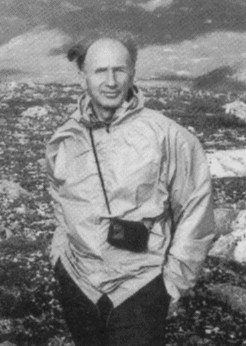
Ed Lorenz hiking Many of you will have seen the obituaries (MIT, NYT) for Ed Lorenz, who died a short time ago. Lorenz is most famous scientifically for discovering the exquisite sensitivity to initial conditions (i.e. chaos) in a simple model of fluid convection, which serves as an archetype for the weather prediction problem. He is most famous outside science for the ‘The Butterfly Effect’ described in his 1972 paper “Predictability: Does the Flap of a Butterfly’s Wings in Brazil Set Off a Tornado in Texas?”. Lorenz’s contributions to both atmospheric science and the mathematics of dynamical systems were wide ranging and seminal. He also directly touched the lives of many of us here at RealClimate, and both his wisdom, and quiet personal charm will be sorely missed.

[Read more…] about Butterflies, tornadoes and climate modelling

Filed Under: Climate modelling, Climate Science

Impressions from the European Geophysical Union conference 2008

22 Apr 2008 by rasmus

Vienna Last week, the European Geophysical Union held its annual general assembly, with thousands of geophysicists converging on the city of Vienna, Austria. It was time to take the pulse of the geophysical community.

[Read more…] about Impressions from the European Geophysical Union conference 2008

Filed Under: Communicating Climate, RC Forum, Reporting on climate

Moulins, Calving Fronts and Greenland Outlet Glacier Acceleration Sifones, frentes glaciares y la aceleración de los glaciares exteriores de Groenlandia

18 Apr 2008 by group

Guest Commentary by Mauri Pelto

The net loss in volume and hence sea level contribution of the Greenland Ice Sheet (GIS) has doubled in recent years from 90 to 220 cubic kilometers/year has been noted recently (Rignot and Kanagaratnam, 2007). The main cause of this increase is the acceleration of several large outlet glaciers. There has also been an alarming increase in the number of photographs of meltwater draining into a moulin somewhere on the GIS, often near Swiss Camp (35 km inland from the calving front). The story goes—warmer temperatures, more surface melting, more meltwater draining through moulins to glacier base, lubricating glacier bed, reducing friction, increasing velocity, and finally raising sea level. Examining this issue two years RealClimate suggested this was likely the correct story. A number of recent results suggest that we need to take another look at this story.

Una traducción está disponible aquí
[Read more…] about Moulins, Calving Fronts and Greenland Outlet Glacier Acceleration Sifones, frentes glaciares y la aceleración de los glaciares exteriores de Groenlandia

Filed Under: Arctic and Antarctic, Climate Science

Model-data-comparison, Lesson 2

10 Apr 2008 by Stefan

In January, we presented Lesson 1 in model-data comparison: if you are comparing noisy data to a model trend, make sure you have enough data for them to show a statistically significant trend. This was in response to a graph by Roger Pielke Jr. presented in the New York Times Tierney Lab Blog that compared observations to IPCC projections over an 8-year period. We showed that this period is too short for a meaningful trend comparison.

This week, the story has taken a curious new twist. In a letter published in Nature Geoscience, Pielke presents such a comparison for a longer period, 1990-2007 (see Figure). Lesson 1 learned – 17 years is sufficient. In fact, the very first figure of last year’s IPCC report presents almost the same comparison (see second Figure).
[Read more…] about Model-data-comparison, Lesson 2

Filed Under: Climate Science

Target CO2 Objectivo CO2

7 Apr 2008 by Gavin

What is the long term sensitivity to increasing CO2? What, indeed, does long term sensitivity even mean? Jim Hansen and some colleagues (not including me) have a preprint available that claims that it is around 6ºC based on paleo-climate evidence. Since that is significantly larger than the ‘standard’ climate sensitivity we’ve often talked about, it’s worth looking at in more detail.


Traducido por Angela Carosio

[Read more…] about Target CO2 Objectivo CO2

Filed Under: Climate Science, Greenhouse gases, Paleoclimate

Blogs and peer-review Blogs y reseña de pares

3 Apr 2008 by Gavin

Nature Geoscience has two commentaries this month on science blogging – one from me and another from Myles Allen (see also these blog posts on the subject). My piece tries to make the point that most of what scientists know is “tacit” (i.e. not explicitly or often written down in the technical literature) and it is that knowledge that allows them to quickly distinguish (with reasonable accuracy) what new papers are worth looking at in detail and which are not. This context is what provides RC (and other science sites) with the confidence to comment both on new scientific papers and on the media coverage they receive.

Myles’ piece stresses that criticism of papers in the peer-reviewed literature needs to be in the peer-reviewed literature and suggests that informal criticism (such as on a blog) might undermine that.

We actually agree that there is a real tension between a quick and dirty pointing out of obvious problems in a published paper (such as the Douglass et al paper last December) and doing the much more substantial work and extra analysis that would merit a peer-reviewed response. The approaches are not however necessarily opposed (for instance, our response to the Schwartz paper last year, which has also lead to a submitted comment). But given everyone’s limited time (and the journals’ limited space), there are fewer official rebuttals submitted and published than there are actual complaints. Furthermore, it is exceedingly rare to write a formal comment on an particularly exceptional paper, with the results that complaints are more common in the peer reviewed literature than applause. In fact, there is much to applaud in modern science, and we like to think that RC plays a positive role in highlighting some of the more important and exciting results that appear.

Myles’ piece, while ending up on a worthwhile point of discussion, illustrates it (in my opinion) with a rather misplaced example that involves RC – a post and follow-up on the Stainforth et al (2005) paper and the media coverage it got. The original post dealt in part with how the new climateprediction.net model runs affected our existing expectation for what climate sensitivity is and whether they justified a revision of any projections into the future. The second post came in the aftermath of a rather poor piece of journalism on BBC Radio 4 that implied (completely unjustifiably) that the CPDN team were deliberately misleading the public about the importance of their work. We discussed then (as we have in many other cases) whether some of the responsibility for overheated or inaccurate press actually belongs to the press release itself and whether we (as a community) could do better at providing more context in such cases. The reason why this isn’t really germane to Myles’ point is that we didn’t criticise the paper itself at all. We thought then (and think now) that the CPDN effort is extremely worthwhile and that lessons from it will be informing model simulations some time into the future. Our criticisms (such as they were) were mainly associated instead with the perception of the paper in parts of the media and wider community – something that is not at all appropriate for a peer-reviewed comment.

This isn’t the place to rehash the climate sensitivity issue (I promise a new post on that shortly), so that will be deemed off-topic. However, we’d be very interested in any comments on the fundamental issue raised – how do (or should) science blogs and traditional peer-review intersect and whether Myles’ perception that they are in conflict is widely shared.


Traducido por Angela Carosio

Nature Geoscience tiene dos comentarios este mes sobre ciencia y blogging, uno mío y otro de Myles Allen (véase también estos correos de blogs sobre el tema aqui y aqui).

Mi comentario trata de establecer una proposición que es que la gran mayoría de lo que los científicos conocen es “tácito” (por ejemplo, no explícito o escrito en la literatura técnica) y es ese conocimiento que les permite distinguir rápidamente, con precisión razonable, que artículos nuevos valen la pena leer en detalle y cuáles no. Este contexto es lo que provee a RC, y a otros sitios científicos, la seguridad para comentar sobre nuevos artículos científicos y sobre la cobertura que éstos reciben en los medios.

El comentario de Myles destaca que la crítica de artículos y la reseña de pares debe permanecer en la literatura de reseña de pares y que la crítica informal, como la que se encuentra en un blog, podría desmerecer el artículo.

Estamos de acuerdo con que hay una gran diferencia entre rápidamente indicar problemas obvios en un artículo publicado (como el artículo de Douglass et al de diciembre pasado) y hacer un trabajo sustancial y un análisis extra que merece una respuesta reseñada por pares. Los enfoques no son necesariamente opuestos (por ejemplo, nuestra respuesta al artículo de Schwartz el año pasado, que dio lugar a un comentario referido). Pero dada la limitación de tiempo de todos, y la limitación de espacio del periodismo, se presentan y se publican muchas menos refutaciones comparando con la cantidad de quejas. Es más, es extremadamente raro que se escriba un comentario formal sobre un artículo particularmente excepcional, dando como resultado que las quejas son mucho más comunes que los aplausos en la reseña de pares. De hecho, hay mucho que aplaudirle a la ciencia moderna, y nos gustaría pensar que RC juega un rol positivo en resaltar algunos de los resultados más importantes y apasionantes que aparecen.

El comentario de Myles, si bien termina con un interesante punto de discusión, es ilustrado, en mi opinión, con un ejemplo fuera de lugar que involucra a RC, un correo y el posterior seguimiento de un artículo de Stainforth et al (2005) y la gran cobertura que éste tuvo en los medios. El correo original aborda el tema sobre como los modelos ejecutados en el sitio climateprediction.net han afectado nuestra expectativa actual sobre que es la sensibilidad climática y si se justifica una revisión de cualquier proyección a futuro. El segundo correo vino luego de un artículo de periodismo, un tanto inferior, en Radio 4 de la BBC que implicaba, injustificadamente, que el público estaba siendo engañado deliberadamente por el equipo CPDN (Climate Prediction Dot Net, por sus siglas en ingles) sobre la importancia de su trabajo. Hemos discutido entonces, así como le hemos hecho en otras ocasiones, si parte de la responsabilidad de artículos inexactos o exaltados publicados pertenece a la misma prensa o si nosotros como comunidad, podríamos hacer un esfuerzo por proveer un contexto en dichos casos. La razón por la cual esto no es pertinente a lo que Myles opinó es que no hemos criticado en absoluto el artículo en sí. En ese entonces pensábamos, y seguimos pensándolo ahora, que el esfuerzo del equipo CPDN valió la pena y que cualquier lección aprendida será informada a los modelos de simulación en un futuro. Nuestra crítica, tal como era, fue asociada en vez con la percepción del artículo en parte de los medios y en la comunidad en general. Estos medios no son para nada adecuados para comentar una reseña de pares.

Este no es el lugar adecuado para argüir el tema de la sensibilidad climática (prometo un nuevo correo respecto a eso pronto), de modo que se considerará fuera de tema. Sin embargo, estamos muy interesados en comentarios sobre el tema fundamental planteado: como se interceptan, o como debieran interceptarse los blogs sobre ciencia y las tradicionales reseñas de pares, y si la percepción de Myles que estas están en conflicto es ampliamente compartida.

Filed Under: Climate Science, Reporting on climate

Primary Sidebar

Search

Search for:

Email Notification

get new posts sent to you automatically (free)
Loading

Recent Posts

  • Unforced Variations: Dec 2025
  • Who should pay?
  • Site updates etc.
  • Raising Climate Literacy
  • Unforced variations: Nov 2025
  • High-resolution ‘fingerprint’ images reveal a weakening Atlantic Ocean circulation (AMOC)

Our Books

Book covers
This list of books since 2005 (in reverse chronological order) that we have been involved in, accompanied by the publisher’s official description, and some comments of independent reviewers of the work.
All Books >>

Recent Comments

  • Susan Anderson on Unforced Variations: Dec 2025
  • One Anonymous Bloke on Unforced Variations: Dec 2025
  • Susan Anderson on Unforced Variations: Dec 2025
  • Piotr on Unforced Variations: Dec 2025
  • zebra on Who should pay?
  • Ray Ladbury on Who should pay?
  • Tomáš Kalisz on Unforced Variations: Dec 2025
  • Ray Ladbury on Who should pay?
  • Nigelj on Who should pay?
  • Nigelj on Raising Climate Literacy
  • Barry E Finch on Unforced Variations: Dec 2025
  • Ken Towe on Who should pay?
  • Atomsk’s Sanakan on Unforced variations: Nov 2025
  • patrick o twentyseven on Who should pay?
  • Atomsk’s Sanakan on Raising Climate Literacy
  • Atomsk’s Sanakan on Raising Climate Literacy
  • Susan Anderson on Who should pay?
  • Susan Anderson on Raising Climate Literacy
  • Radge Havers on Who should pay?
  • One Anonymous Bloke on Unforced Variations: Dec 2025
  • Ron R.. on Who should pay?
  • JCM on Raising Climate Literacy
  • Barry E Finch on Unforced Variations: Dec 2025
  • Barry E Finch on Unforced Variations: Dec 2025
  • Barton Paul Levenson on Raising Climate Literacy
  • Barton Paul Levenson on Who should pay?
  • MA Rodger on Unforced Variations: Dec 2025
  • zebra on Unforced Variations: Dec 2025
  • zebra on Unforced Variations: Dec 2025
  • ozajh on Who should pay?

Footer

ABOUT

  • About
  • Translations
  • Privacy Policy
  • Contact Page
  • Login

DATA AND GRAPHICS

  • Data Sources
  • Model-Observation Comparisons
  • Surface temperature graphics
  • Miscellaneous Climate Graphics

INDEX

  • Acronym index
  • Index
  • Archives
  • Contributors

Realclimate Stats

1,389 posts

15 pages

248,806 comments

Copyright © 2025 · RealClimate is a commentary site on climate science by working climate scientists for the interested public and journalists.