[Read more…] about How to cook a graph in three easy lessons
Climate science from climate scientists...
by raypierre

[Read more…] about How to cook a graph in three easy lessons
by rasmus
By Rasmus Benestad & Michael Mann
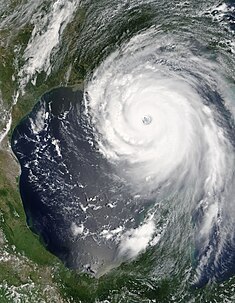
Just as Typhoon Nargis has reminded us of the destructive power of tropical cyclones (with its horrible death toll in Burma–around 100,000 according to the UN), a new paper by Knutson et al in the latest issue of the journal Nature Geosciences purports to project a reduction in Atlantic hurricane activity (principally the ‘frequency’ but also integrated measures of powerfulness).
The close timing of the Knutson et al and Typhoon Nargis is of course coincidental. But the study has been accorded the unprecedented privilege (that is, for a climate change article published during the past 7 years) of a NOAA press conference. What’s the difference this time? Well, for one thing, the title of the paper: “Simulated reduction in Atlantic hurricane frequency under twenty-first-century warming conditions” (emphasis added).
[Read more…] about Climate Change and Tropical Cyclones (Yet Again)
by group
Last week we proposed a bet against the “pause in global warming” forecast in Nature by Keenlyside et al. and we promised to present our scientific case later – so here it is.
Traducido por Angela Carosio
La semana pasada propusimos una apuesta contra el pronóstico en un artículo de la revista Nature “pausa en el calentamiento global” por Keenlyside et al. y prometimos presentar nuestro caso científico en otra ocasión, y aquí está.
[Read more…] about The Global Cooling Bet – Part 2
by Gavin
Over the last couple of months there has been much blog-viating about what the models used in the IPCC 4th Assessment Report (AR4) do and do not predict about natural variability in the presence of a long-term greenhouse gas related trend. Unfortunately, much of the discussion has been based on graphics, energy-balance models and descriptions of what the forced component is, rather than the full ensemble from the coupled models. That has lead to some rather excitable but ill-informed buzz about very short time scale tendencies. We have already discussed how short term analysis of the data can be misleading, and we have previously commented on the use of the uncertainty in the ensemble mean being confused with the envelope of possible trajectories (here). The actual model outputs have been available for a long time, and it is somewhat surprising that no-one has looked specifically at it given the attention the subject has garnered. So in this post we will examine directly what the individual model simulations actually show.
[Read more…] about What the IPCC models really say
by Stefan
By Stefan Rahmstorf, Michael Mann, Ray Bradley, William Connolley, David Archer, and Caspar Ammann
Global cooling appears to be the “flavour of the month”. First, a rather misguided media discussion erupted on whether global warming had stopped, based on the observed temperatures of the past 8 years or so (see our post). Now, an entirely new discussion is capturing the imagination, based on a group of scientists from Germany predicting a pause in global warming last week in the journal Nature (Keenlyside et al. 2008).
Specifically, they make two forecasts for global temperature, as discussed in the last paragraphs of their paper and shown in their Figure 4 (see below). The first forecast concerns the time interval 2000-2010, while the second concerns the interval 2005-2015 (*). For these two 10-year averages, the authors make the following prediction:
“… the initialised prediction indicates a slight cooling relative to 1994-2004 conditions”
Their graph shows this: temperatures in the two forecast intervals (green points shown at 2005 and 2010) are almost the same and are both lower than observed in 1994-2004 (the end of the red line in their graph).
That this cooling would just be a temporary blip and would change nothing about global warming goes without saying and has been amply discussed elsewhere (e.g. here). But another question has been rarely discussed: will this forecast turn out to be correct?
We think not – and we are prepared to bet serious money on this. We have double-checked with the authors: they say they really mean this as a serious forecast, not just as a methodological experiment. If the authors of the paper really believe that their forecast has a greater than 50% chance of being correct, then they should accept our offer of a bet; it should be easy money for them. If they do not accept our bet, then we must question how much faith they really have in their own forecast.
The bet we propose is very simple and concerns the specific global prediction in their Nature article. If the average temperature 2000-2010 (their first forecast) really turns out to be lower or equal to the average temperature 1994-2004 (*), we will pay them € 2500. If it turns out to be warmer, they pay us € 2500. This bet will be decided by the end of 2010. We offer the same for their second forecast: If 2005-2015 (*) turns out to be colder or equal compared to 1994-2004 (*), we will pay them € 2500 – if it turns out to be warmer, they pay us the same. The basis for the temperature comparison will be the HadCRUT3 global mean surface temperature data set used by the authors in their paper.
To be fair, the bet needs an escape clause in case a big volcano erupts or a big meteorite hits the Earth and causes cooling below the 1994-2004 level. In this eventuality, the forecast of Keenlyside et al. could not be verified any more, and the bet is off.
The bet would also need a neutral arbiter – we propose, for example, the director of the Hadley Centre, home of the data used by Keenlyside et al., or a committee of neutral colleagues. This neutral arbiter would also decide whether a volcano or meteorite impact event is large enough as to make the bet obsolete.
We will discuss the scientific reasons for our assessment here another time – first we want to hear from Keenlyside et al. whether they accept our bet. Our friendly challenge is out – we hope they will accept it in good sportsmanship.
(*) We adopt here the definition of the 10-year intervals as in their paper, which is from 1 November of the first year to 31 October of the last year. I.e.: 2000-2010 means 1 November 2000 until 31 October 2010.
Update: We have now published part 2 of this bet with our scientific arguments.
_______________________
Update: Andy Revkin has weighed in at “dot earth”.
Update 5/11/08: so has Anna Barnett at Nature’s ‘climate feedback’ blog
El enfriamiento global parece ser el sabor del mes. Primero, ha brotado una discusión descarriada en los medios de comunicación sobre si el calentamiento global se ha detenido, basándose en las temperaturas observadas en los pasados 8 años (ver nuestro correo aquí). Ahora hay una nueva discusión que está capturando la imaginación, basada en un grupo de científicos alemanes que predijeron una pausa en el calentamiento global la semana pasada en un artículo en la revista Nature (Keenlyside et al. 2008).
En dicho artículo se hacen dos pronósticos de temperaturas globales, y se discuten en los últimos párrafos y se muestran en la Figura 4 (ver abajo). El primer pronóstico se refiere a los años 2000-2010, mientras que el segundo se refiere a los años 2005-2015 (*). Los autores hacen las siguientes predicciones para estos dos intervalos promedio de diez años:
“la predicción inicial indica un leve enfriamiento con respecto a las condiciones en los años 1994-2004”
El gráfico muestra lo siguiente: Las temperaturas en los dos intervalos pronosticados (los puntos verdes muestran 2005 y 2010) son casi iguales y son ambas más bajas que las observadas en 1994-2004, correspondiente al final de la línea roja en el gráfico.
No es siquiera necesario explicar que este enfriamiento es solo un pequeño parpadeo y que no cambiará nada del calentamiento global. El tema ha sido ampliamente discutido en otros sitios (ej. aquí). Pero hay una pregunta que se ha discutido poco: ¿Será correcto el pronóstico?
Nosotros pensamos que no, y estamos dispuestos a apostar una importante suma de dinero por nuestra postura. Hemos verificado dos veces con los autores: ellos insisten en que su artículo es un pronóstico serio y que no se trata de un experimento metodológico. Si los autores realmente piensan que su pronóstico tiene una chance de ser correcta mayor al 50%, entonces deberían aceptar nuestra apuesta; sería una oportunidad de ganar dinero fácil. Si no aceptan nuestra apuesta, deberíamos cuestionar, entonces, cuanta fe realmente tienen en su pronóstico.
La apuesta que proponemos es muy simple y concierne su pronóstico específico en el artículo de la revista Nature. Si la temperatura promedio de 2000-2010 (su primer pronóstico) resulta ser más baja o igual que la temperatura promedio de 1994-2004 (*), les pagaremos € 2500. Si resulta ser más alta, ellos nos pagan € 2500 a nosotros. Esta apuesta será decidida a fines del 2010. Ofrecemos lo mismo para el segundo pronóstico: si la temperatura promedio de 2005-2015(*) resulta ser más baja o igual comparando con la temperatura promedio de 1994-2004(*) les pagaremos € 2500, si resulta ser más alta, ellos nos pagan a nosotros esa cifra. Tomaremos el HADCRUT3, conjunto de datos del promedio de la temperatura de superficie global, como base para comparar las temperaturas, que es la misma base de datos utilizada por los autores en el artículo.
Para ser justos, necesitaríamos una cláusula de salvaguardia, por si un gran volcán hace erupción o si un gran meteorito golpea la tierra y causa un enfriamiento menor al del promedio de 1994-2004. En este caso, el pronóstico de Keenlyside et al. no se podría verificar y por lo tanto la apuesta sería inválida.
La apuesta también tendría que tener un árbitro neutral, proponemos, por ejemplo, el director del Hadley Centre, donde se albergan los datos utilizados por Keenlyside et al., o un comité de colegas neutrales. Dicho árbitro neutral también decidirá si una eventual explosión volcánica o un impacto de meteorito son lo suficientemente grandes para invalidar la apuesta.
Discutiremos pronto las razones científicas de nuestra evaluación, primero queremos ver si Keenlyside et al. acepta nuestra apuesta. Nuestro amigable desafío ha sido propuesto y esperamos que sea aceptado con buen espíritu deportivo.
(*) Adoptamos aquí la misma definición de intervalos de 10 años que en su artículo, que va del 1 de noviembre del primer año al 31 de octubre del último año, ej.:2000-2010 significa 1 de noviembre de 2000 hasta 31 de octubre de 2010.
Actualización: Ya hemos publicado la segunda parte de esta apuesta con nuestros argumentos científicos.
by Gavin
A few weeks ago I was at a meeting in Cambridge that discussed how (or whether) paleo-climate information can reduce the known uncertainties in future climate simulations.
The uncertainties in the impacts of rising greenhouse gases on multiple systems are significant: the potential impact on ENSO or the overturning circulation in the North Atlantic, probable feedbacks on atmospheric composition (CO2, CH4, N2O, aerosols), the predictability of decadal climate change, global climate sensitivity itself, and perhaps most importantly, what will happen to ice sheets and regional rainfall in a warming climate.
The reason why paleo-climate information may be key in these cases is because all of these climate components have changed in the past. If we can understand why and how those changes occurred then, that might inform our projections of changes in the future. Unfortunately, the simplest use of the record – just going back to a point that had similar conditions to what we expect for the future – doesn’t work very well because there are no good analogs for the perturbations we are making. The world has never before seen such a rapid rise in greenhouse gases with the present-day configuration of the continents and with large amounts of polar ice. So more sophisticated approaches must be developed and this meeting was devoted to examining them.
[Read more…] about Back to the future
by group

[Read more…] about Butterflies, tornadoes and climate modelling
by group
By John Fleck and William Connolley
To veterans of the Climate Wars, the old 1970s global cooling canard – “How can we believe climate scientists about global warming today when back in the 1970s they told us an ice age was imminent?” – must seem like a never-ending game of Whack-a-mole. One of us (WMC) has devoted years to whacking down the mole (see here, here and here, for example), while the other of us (JF) sees the mole pop up anew in his in box every time he quotes contemporary scientific views regarding climate change in his newspaper stories.
Una traducción está disponible aqui
Tłumaczenie na polski dostępne jest tutaj.
[Read more…] about The global cooling mole
by Gavin
In the lead up to the 4th Assessment Report, all the main climate modelling groups (17 of them at last count) made a series of coordinated simulations for the 20th Century and various scenarios for the future. All of this output is publicly available in the PCMDI IPCC AR4 archive (now officially called the CMIP3 archive, in recognition of the two previous, though less comprehensive, collections). We’ve mentioned this archive before in passing, but we’ve never really discussed what it is, how it came to be, how it is being used and how it is (or should be) radically transforming the comparisons of model output and observational data.
[Read more…] about The IPCC model simulation archive
by Gavin
Gavin Schmidt and Stefan Rahmstorf
John Tierney and Roger Pielke Jr. have recently discussed attempts to validate (or falsify) IPCC projections of global temperature change over the period 2000-2007. Others have attempted to show that last year’s numbers imply that ‘Global Warming has stopped’ or that it is ‘taking a break’ (Uli Kulke, Die Welt)). However, as most of our readers will realise, these comparisons are flawed since they basically compare long term climate change to short term weather variability.
This becomes immediately clear when looking at the following graph:
[Read more…] about Uncertainty, noise and the art of model-data comparison
1,389 posts
15 pages
248,810 comments