It is not every day that I come across a scientific publication that so totally goes against my perception of what science is all about. Humlum et al., 2011 present a study in the journal Global and Planetary Change, claiming that most of the temperature changes that we have seen so far are due to natural cycles.
They claim to present a new technique to identify the character of natural climate variations, and from this, to produce a testable forecast of future climate. They project that
the observed late 20th century warming in Svalbard is not going to continue for the next 20–25 years. Instead the period of warming may be followed by variable, but generally not higher temperatures for at least the next 20–25 years.
However, their claims of novelty are overblown, and their projection is demonstrably unsound.
[Read more…] about Curve-fitting and natural cycles: The best part
References
- O. Humlum, J. Solheim, and K. Stordahl, "Identifying natural contributions to late Holocene climate change", Global and Planetary Change, vol. 79, pp. 145-156, 2011. http://dx.doi.org/10.1016/j.gloplacha.2011.09.005
 One of my (Eric’s) favorite old books is The Starship and the Canoe by Kenneth Brower It’s a 1970s book about a father (Freeman Dyson, theoretical physicist living in Princeton) and son (George Dyson, hippy kayaker living 90 ft up in a fir tree in British Columbia) that couldn’t be more different, yet are strikingly similar in their originality and brilliance. I started out my career heading into astrophysics, and I’m also an avid sea kayaker and I grew up with the B.C. rainforest out my back door. So I think I have a sense of what drives these guys. Yet I’ve never understood how Freeman Dyson became such a climate contrarian and advocate for off-the-wall biogeoengineering solutions like carbon-eating trees, something we’ve
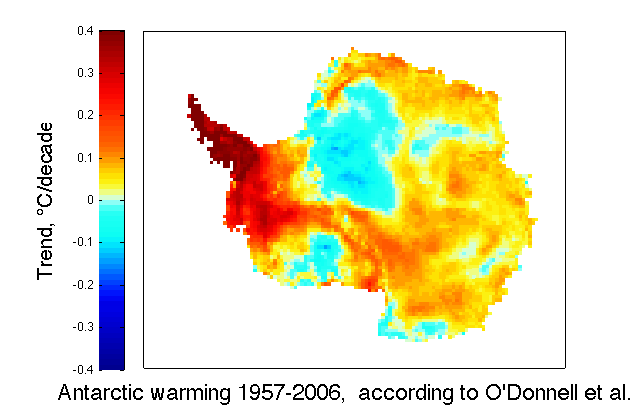
 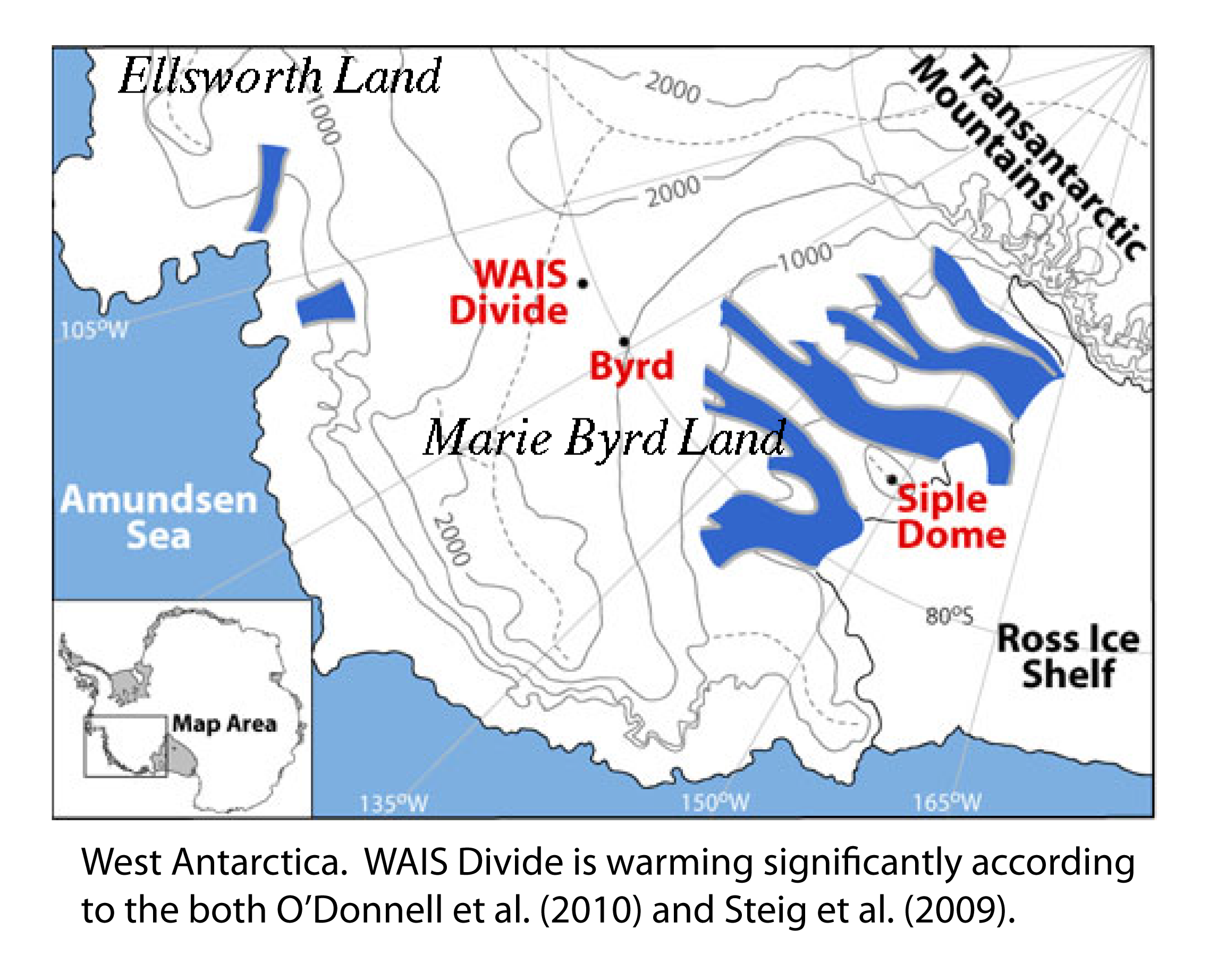 In this post, I’ll summarize the key methodological changes suggested by O’Donnell et al., discuss how their results compare with our results, and the implications for our understanding of recent Antarctic climate change. I’ll then try to make sense of how O’Donnell et al. have apparently wound up with an erroneous result.