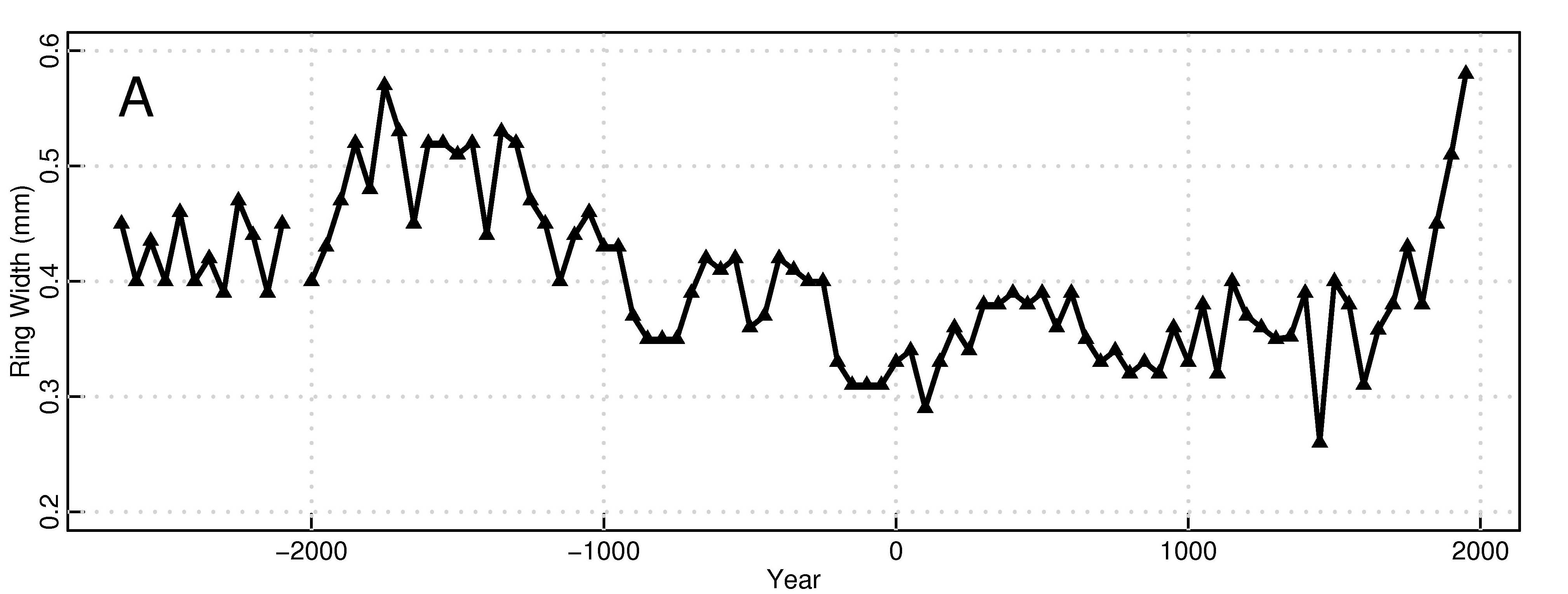
We’ve often discussed the how’s and why’s of correcting incorrect information that is occasionally found in the peer-reviewed literature. There are multiple recent instances of heavily-promoted papers that contained fundamental flaws that were addressed both on blogs and in submitted comments or follow-up papers (e.g. McLean et al, Douglass et al., Schwartz). Each of those wasted a huge amount of everyone’s time, though there is usually some (small) payoff in terms of a clearer statement of the problems and lessons for subsequent work. However, in each of those cases, the papers were already “in press” by the time other people were aware of the problems.
What is the situation though when problems (of whatever seriousness) are pointed out at an earlier stage? For instance, when a paper has been accepted in principle but a final version has not been sent in and well before the proofs have been sent out? At that point it would seem to be incumbent on the authors to ensure that any errors are fixed before they have a chance to confuse or mislead a wider readership. Often in earlier times corrections and adjustments would have been made using the ‘Note added in proof’, but this is less used these days since it is so easy to fix electronic versions.
[Read more…] about Muddying the peer-reviewed literature
It is popularly understood that glaciologists consider West Antarctica the biggest source of uncertainty in sea level projections. The base of the 3000-m thick West Antarctic Ice Sheet (WAIS) – unlike the much larger East Antarctic Ice Sheet – lies below sea level, and it has been recognized for a long time that this means it has the potential to change very rapidly. Most of the grounded West Antarctic ice sheet drains into the floating Ross and Ronne-Filchner ice shelves, but a significant fraction also drains into the much smaller Pine Island Glacier. Glaciologists are paying very close attention to Pine Island Glacier (“PIG” on map, right) and nearby Thwaites Glacier. In the following guest post, Mauri Pelto explains why.