• Skip to primary navigation
  • Skip to main content
  • Skip to primary sidebar
  • Skip to footer

RealClimate

Climate science from climate scientists...

  • Start here
  • Model-Observation Comparisons
  • Miscellaneous Climate Graphics
  • Surface temperature graphics
You are here: Home / Archives for Scientific practice

Scientific practice

Cracking the Climate Change Case

26 Oct 2018 by Gavin

I have an op-ed in the New York Times this week:

How Scientists Cracked the Climate Change Case
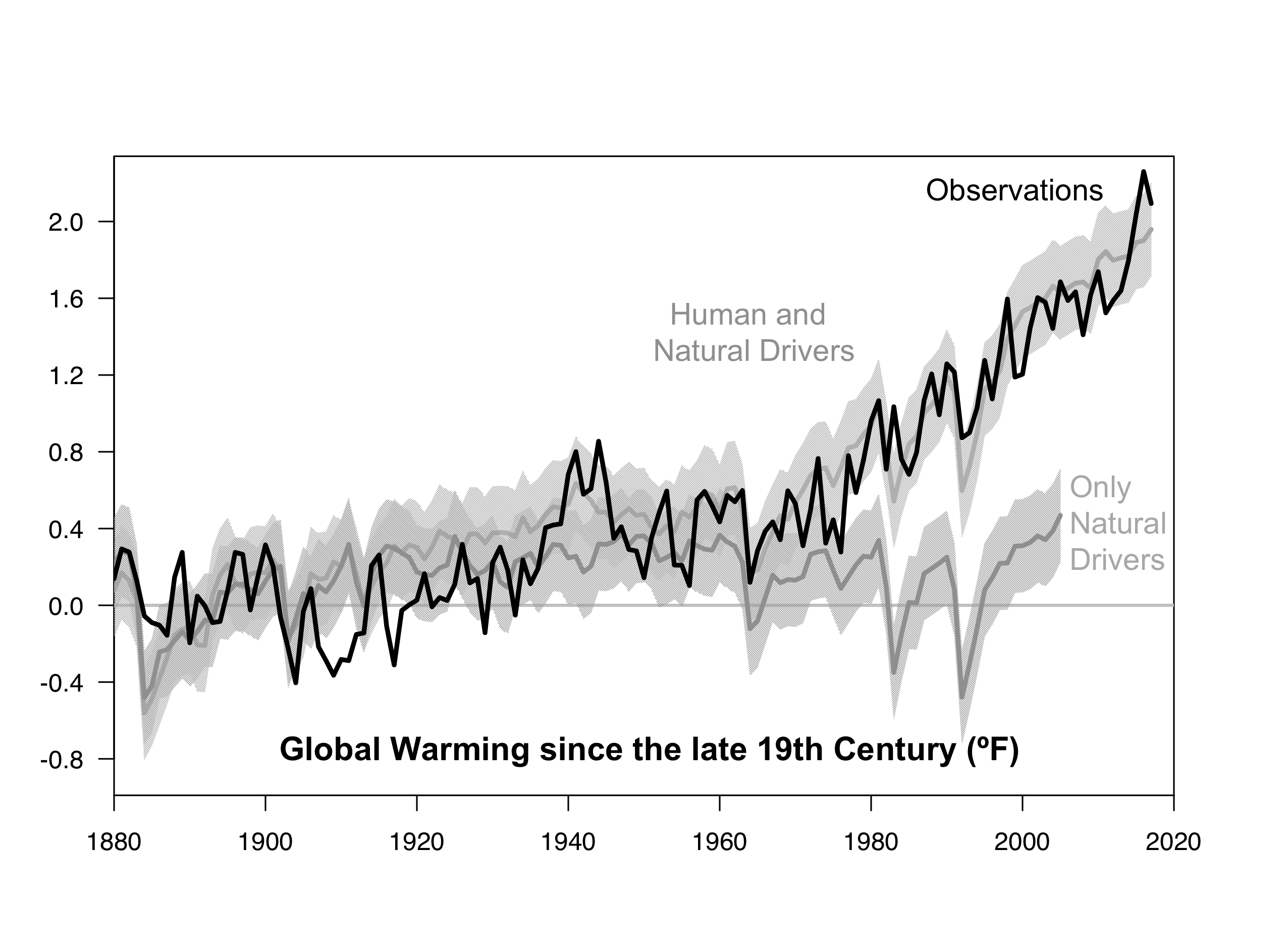
The biggest crime scene on the planet is the planet. We know the earth is warming, but who or what is causing it?
Emilia Miękisz

Many of you will recognise the metaphor from previous Realclimate pieces (this is earliest one I think, from 2007), and indeed, the working title was “CSI: Planet Earth”. The process description and conclusions are drawn from multiple sources on the attribution of recent climate trends (here, here etc.), as well the data visualization for surface temperature trends at Bloomberg News.

There have been many comments about this on Twitter – most appreciative, some expected, and a few interesting. The expected criticisms come from people who mostly appear not to have read the piece at all (“Climate has changed before!” – a claim that no-one disputes), and a lot of pointless counter-arguments by assertion. Of the more interesting comment threads, was one started by Ted Nordhaus who asked

I wonder who exactly the audience for this sort of thing is at this point… https://t.co/m977McdHZC

— Ted Nordhaus (@TedNordhaus) October 25, 2018

My response is basically that it might be old hat for him (and maybe many readers here), but I am constantly surprised at the number of people – even those concerned about climate – who are unaware of how we do attribution and how solid the science behind the IPCC statements is. And judging by many of the comments, it certainly isn’t the case that these pieces are only read by the already convinced. But asking how many people are helped to be persuaded by articles like this is a valid question, and I don’t really know the answer. Anyone?

Filed Under: Climate modelling, Climate Science, Communicating Climate, Greenhouse gases, Instrumental Record, Scientific practice

European climate services take an important leap forward 

27 Sep 2018 by rasmus

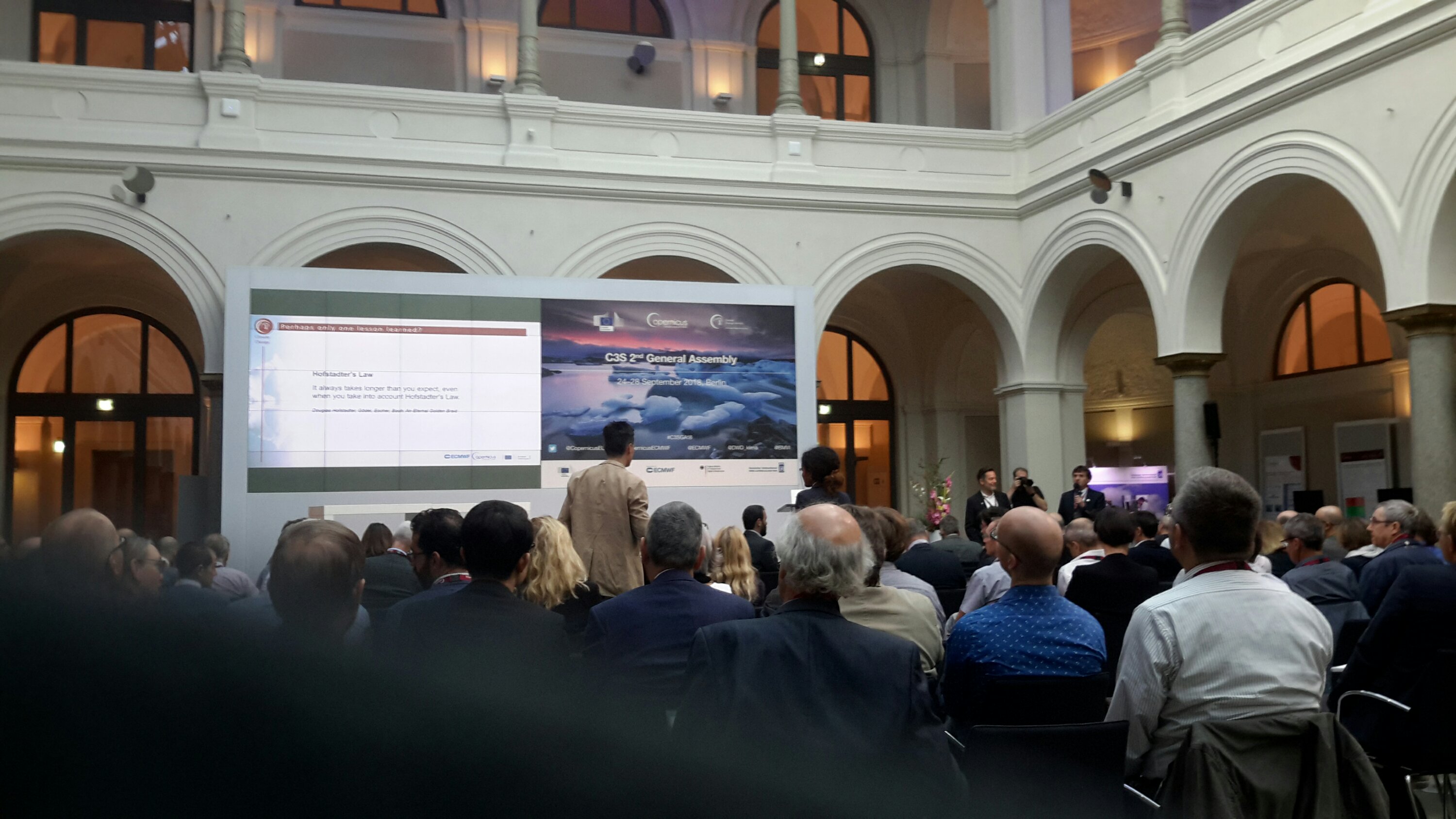
An important milestone was passed during the second general assembly of the Copernicus Climate Change Service, which took place in Berlin on Sept 24-28 (twitter hashtag '#C3SGA18'). The European climate service has become operational, hosted by the European Centre for Medium-Range Forecasts (ECMWF).


[Read more…] about European climate services take an important leap forward 

Filed Under: Climate conference report, Climate impacts, Climate Science, climate services, Communicating Climate, Scientific practice

Harde Times

4 Apr 2018 by Gavin

Readers may recall a post a year ago about a nonsense paper by Hermann Harde that appeared in Global and Planetary Change. We reported too on the crowd-sourced rebuttal led by Peter Köhler that was published last October. Now comes an editorial by three members of the Editorial Board (Martin Grosjean, Joel Guiot and Zicheng Yu) reporting on what the circumstances were that led to the Harde paper appearing.

[Read more…] about Harde Times

References

  1. H. Harde, "Scrutinizing the carbon cycle and CO2 residence time in the atmosphere", Global and Planetary Change, vol. 152, pp. 19-26, 2017. http://dx.doi.org/10.1016/j.gloplacha.2017.02.009
  2. P. Köhler, J. Hauck, C. Völker, D.A. Wolf-Gladrow, M. Butzin, J.B. Halpern, K. Rice, and R.E. Zeebe, "Comment on “ Scrutinizing the carbon cycle and CO 2 residence time in the atmosphere ” by H. Harde", Global and Planetary Change, vol. 164, pp. 67-71, 2018. http://dx.doi.org/10.1016/j.gloplacha.2017.09.015
  3. M. Grosjean, J. Guiot, and Z. Yu, "Commentary", Global and Planetary Change, vol. 164, pp. 65-66, 2018. http://dx.doi.org/10.1016/j.gloplacha.2017.12.023

Filed Under: Carbon cycle, Climate Science, Scientific practice, skeptics

Alsup asks for answers

11 Mar 2018 by Gavin

Some of you might have read about the lawsuit by a number of municipalities (including San Francisco and Oakland) against the major oil companies for damages (related primarily to sea level rise) caused by anthropogenic climate change. The legal details on standing, jurisdiction, etc. are all very interesting (follow @ColumbiaClimate for those details), but somewhat uniquely, the judge (William Alsup) has asked for a tutorial on climate science (2 hours of evidence from the plaintiffs and the defendents). Furthermore, he has posted a list of eight questions that he’d like the teams to answer.

[Read more…] about Alsup asks for answers

Filed Under: Carbon cycle, Climate modelling, Climate Science, Greenhouse gases, Instrumental Record, Paleoclimate, Scientific practice

What did NASA know? and when did they know it?

24 Dec 2017 by Gavin

If you think you know why NASA did not report the discovery of the Antarctic polar ozone hole in 1984 before the publication of Farman et al in May 1985, you might well be wrong.

One of the most fun things in research is what happens when you try and find a reference to a commonly-known fact and slowly discover that your “fact” is not actually that factual, and that the real story is more interesting than you imagined…

[Read more…] about What did NASA know? and when did they know it?

References

  1. J.C. Farman, B.G. Gardiner, and J.D. Shanklin, "Large losses of total ozone in Antarctica reveal seasonal ClOx/NOx interaction", Nature, vol. 315, pp. 207-210, 1985. http://dx.doi.org/10.1038/315207a0

Filed Under: Arctic and Antarctic, Climate Science, Scientific practice

Fall AGU 2017

7 Dec 2017 by group

It’s that time of year again. #AGU17 is from Dec 11 to Dec 16 in New Orleans (the traditional venue in San Francisco is undergoing renovations).

As in previous years, there will be extensive live streams from “AGU On Demand” (free, but an online registration is required) of interesting sessions and the keynote lectures from prize-winners and awardees.

Some potential highlights will be Dan Rather, Baba Brinkman, and Joanna Morgan. The E-lightning sessions are already filled with posters covering many aspects of AGU science. Clara Deser, Bjorn Stevens, David Neelin, Linda Mearns and Thomas Stocker are giving some the key climate-related named lectures. The Tyndall Lecture by Jim Fleming might also be of interest.

As usual there are plenty of sessions devoted to public affairs and science communication, including one focused on the use of humour in #scicomm (on Friday at 4pm to encourage people to stay to the end I imagine), and a workshop on Tuesday (joint with the ACLU and CSLDF) on legal issues for scientist activists and advocates.

AGU is also a great place to apply for jobs, get free legal advice, mingle, and network.

A couple of us will be there – and we might find time to post on anything interesting we see. If any readers spot us, say hi!

Filed Under: Climate conference report, Climate Science, Communicating Climate, Scientific practice

Data rescue projects

17 Aug 2017 by Gavin

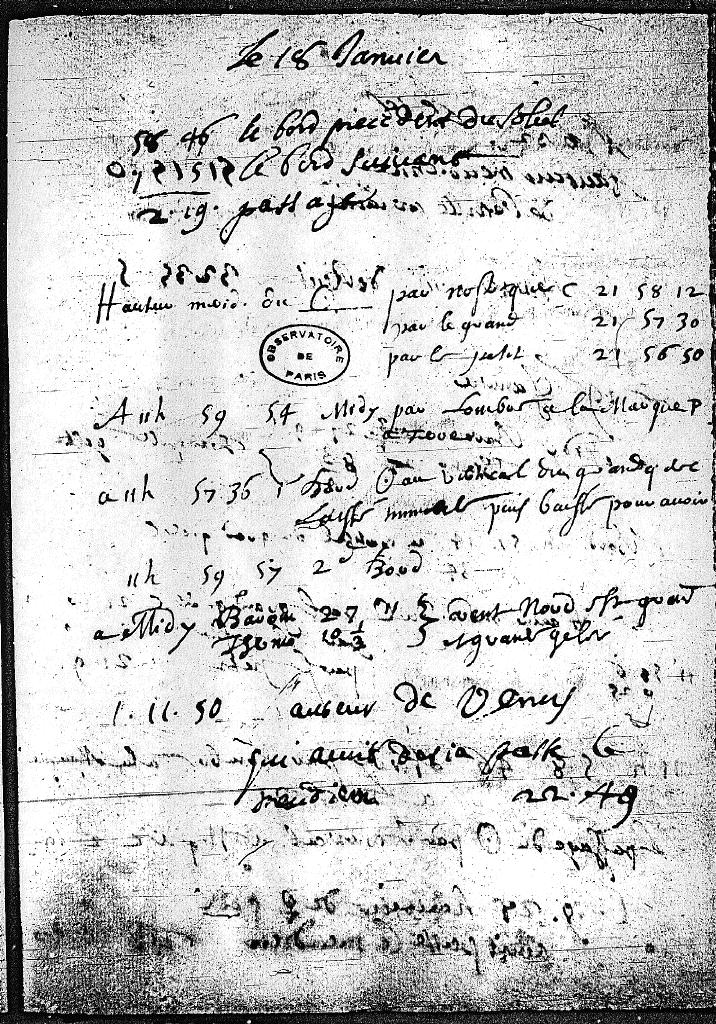
It’s often been said that while we can only gather new data about the planet at the rate of one year per year, rescuing old data can add far more data more quickly. Data rescue is however extremely labor intensive. Nonetheless there are multiple data rescue projects and citizen science efforts ongoing, some of which we have highlighted here before. For those looking for an intro into the subject, this 2014 article is an great introduction.


Weather diary from the the Observatoire de Paris, written by Giovanni Cassini on 18th January 1789.

I was asked this week whether there was a list of these projects, and with a bit of help from Twitter, we came up with the following:

  • Old Weather (@oldweather)
  • Weather Detective (closing soon)
  • Weather Rescue
  • NOAA Climate Database Modernization Program
  • New Zealand (@DeepSouth_NZ)
  • The International Environmental Data Rescue Organization (IEDRO)
  • Atmospheric Circulation Reconstruction over the Earth (@met_acre)
  • The International Data Rescue Portal (i-Dare)
  • Met Éirann (poster)
  • Historical Climatology (list of more databases)
  • Data Rescue at home
  • Historical Canadian data
  • SE Australia Recent Climate History (no longer active?)
  • Congo basin eco-climatological data recovery and valorisation (COBECORE)
  • The climate and environmental history collaborative research environment (Tambora)

(If you know of any more, please add them in the comments, and I’ll try and keep this list up to date).

Filed Under: Climate Science, Instrumental Record, Scientific practice

Observations, Reanalyses and the Elusive Absolute Global Mean Temperature

10 Aug 2017 by Gavin

One of the most common questions that arises from analyses of the global surface temperature data sets is why they are almost always plotted as anomalies and not as absolute temperatures.

There are two very basic answers: First, looking at changes in data gets rid of biases at individual stations that don’t change in time (such as station location), and second, for surface temperatures at least, the correlation scale for anomalies is much larger (100’s km) than for absolute temperatures. The combination of these factors means it’s much easier to interpolate anomalies and estimate the global mean, than it would be if you were averaging absolute temperatures. This was explained many years ago (and again here).

Of course, the absolute temperature does matter in many situations (the freezing point of ice, emitted radiation, convection, health and ecosystem impacts, etc.) and so it’s worth calculating as well – even at the global scale. However, and this is important, because of the biases and the difficulty in interpolating, the estimates of the global mean absolute temperature are not as accurate as the year to year changes.

This means we need to very careful in combining these two analyses – and unfortunately, historically, we haven’t been and that is a continuing problem.

[Read more…] about Observations, Reanalyses and the Elusive Absolute Global Mean Temperature

Filed Under: Climate modelling, Climate Science, Instrumental Record, Scientific practice, statistics

What do you need to know about climate?

14 Jun 2017 by rasmus

What do you need to know about climate in order to be in the best position to adapt to future change? This question was discussed in a European workshop on Copernicus climate services during a heatwave in Barcelona, Spain (June 12-14).

[Read more…] about What do you need to know about climate?

Filed Under: Climate impacts, Climate modelling, Climate Science, Communicating Climate, downscaling, Scientific practice, Solutions

Someone C.A.R.E.S.

25 Feb 2017 by Gavin

Do we need a new venue for post-publication comments and replications?

Social media is full of commentary (of varying degrees of seriousness) on the supposed replication crisis in science. Whether this is really a crisis, or just what is to be expected at the cutting edge is unclear (and may well depend on the topic and field). But one thing that is clear from all the discussion is that it’s much too hard to publish replications, or even non-replications, in the literature. Often these efforts have to be part of a new paper that has to make its own independent claim to novelty before it can get in the door and that means that most attempted replications don’t get published at all.

This is however just a subset of the difficulty that exists in getting any kind of comment on published articles accepted. Having been involved in many attempts – in the original journal or as a new paper – some successful, many not, it has become obvious to me that the effort to do so is wholly disproportionate to the benefits for the authors, and is thus very effectively discouraged.

The overall mismatch between the large costs/minimal benefit for the commenters, compared to the real benefits for the field, suggests that something really needs to change.

I have thought for a long time that an independent journal venue for comments would be a good idea, but a tweet by Katharine Hayhoe last weekend made me realize that the replication issue might be well served by a similar approach. So, here’s a proposal for a new journal.

Commentary And Replication in Earth Science (C.A.R.E.S.)

[Read more…] about Someone C.A.R.E.S.

References

  1. G. Foster, J.D. Annan, G.A. Schmidt, and M.E. Mann, "Comment on “Heat capacity, time constant, and sensitivity of Earth's climate system” by S. E. Schwartz", Journal of Geophysical Research: Atmospheres, vol. 113, 2008. http://dx.doi.org/10.1029/2007JD009373
  2. G.A. Schmidt, "Spurious correlations between recent warming and indices of local economic activity", International Journal of Climatology, vol. 29, pp. 2041-2048, 2009. http://dx.doi.org/10.1002/joc.1831

Filed Under: Climate Science, Scientific practice

  • « Go to Previous Page
  • Page 1
  • Page 2
  • Page 3
  • Page 4
  • Page 5
  • Page 6
  • Interim pages omitted …
  • Page 8
  • Go to Next Page »

Primary Sidebar

Search

Search for:

Email Notification

get new posts sent to you automatically (free)
Loading

Recent Posts

  • AI/ML climate magic?
  • Unforced variations: Jan 2026
  • 1.5ºC and all that
  • Unforced Variations: Dec 2025
  • Who should pay?
  • Site updates etc.

Our Books

Book covers
This list of books since 2005 (in reverse chronological order) that we have been involved in, accompanied by the publisher’s official description, and some comments of independent reviewers of the work.
All Books >>

Recent Comments

  • Nigelj on Unforced variations: Jan 2026
  • Tomáš Kalisz on Unforced variations: Jan 2026
  • Atomsk’s Sanakan on 1.5ºC and all that
  • Ron R. on AI/ML climate magic?
  • Atomsk’s Sanakan on 1.5ºC and all that
  • Atomsk’s Sanakan on 1.5ºC and all that
  • Keith Woollard on AI/ML climate magic?
  • Pete Best on 1.5ºC and all that
  • Keith Woollard on 1.5ºC and all that
  • Ray Ladbury on AI/ML climate magic?
  • Ron R. on AI/ML climate magic?
  • Data on Unforced variations: Jan 2026
  • Data on 1.5ºC and all that
  • Ron R. on AI/ML climate magic?
  • Ron R. on AI/ML climate magic?
  • Data on Unforced variations: Jan 2026
  • Killian on Unforced variations: Jan 2026
  • Killian on Unforced variations: Jan 2026
  • Killian on Unforced variations: Jan 2026
  • Piotr on Unforced variations: Jan 2026
  • Killian on Unforced variations: Jan 2026
  • Killian on Unforced variations: Jan 2026
  • Killian on Unforced variations: Jan 2026
  • Data on AI/ML climate magic?
  • Barton Paul Levenson on 1.5ºC and all that
  • Paul Pukite (@whut) on AI/ML climate magic?
  • Nigelj on AI/ML climate magic?
  • zebra on AI/ML climate magic?
  • Susan Anderson on Unforced variations: Jan 2026
  • Adam Lea on AI/ML climate magic?

Footer

ABOUT

  • About
  • Translations
  • Privacy Policy
  • Contact Page
  • Login

DATA AND GRAPHICS

  • Data Sources
  • Model-Observation Comparisons
  • Surface temperature graphics
  • Miscellaneous Climate Graphics

INDEX

  • Acronym index
  • Index
  • Archives
  • Contributors

Realclimate Stats

1,392 posts

15 pages

249,396 comments

Copyright © 2026 · RealClimate is a commentary site on climate science by working climate scientists for the interested public and journalists.